Dublin, 14 nëntor 2026
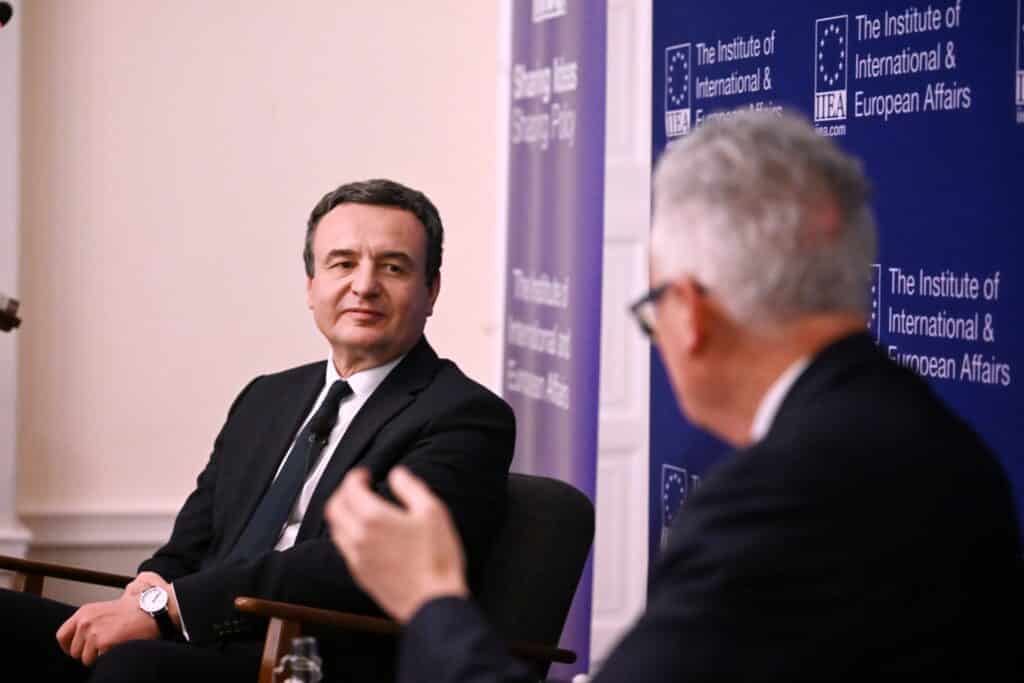
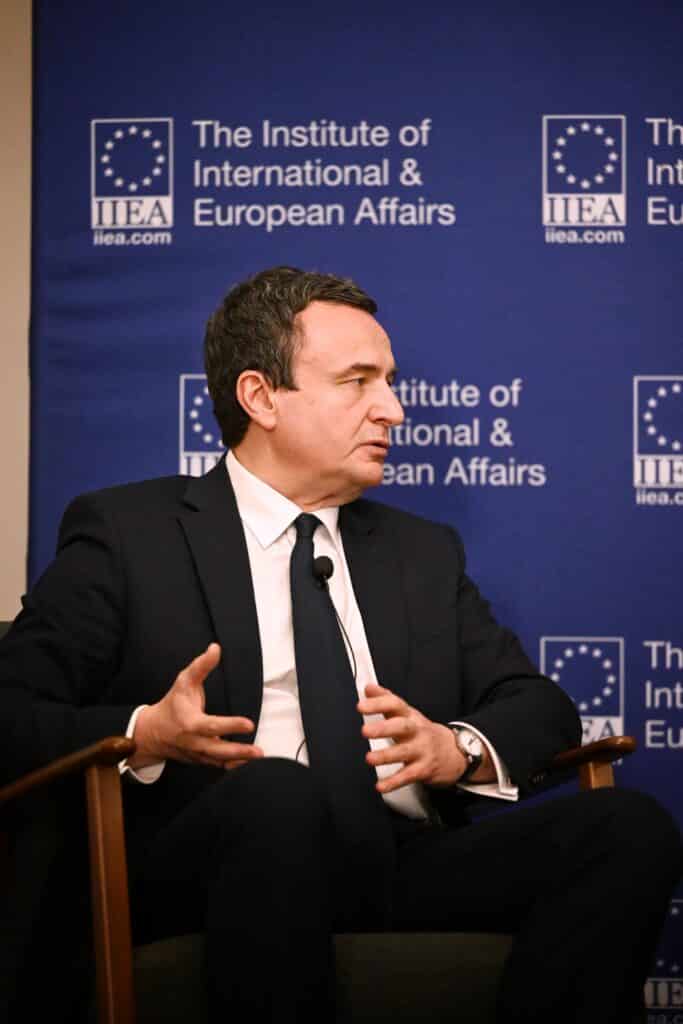
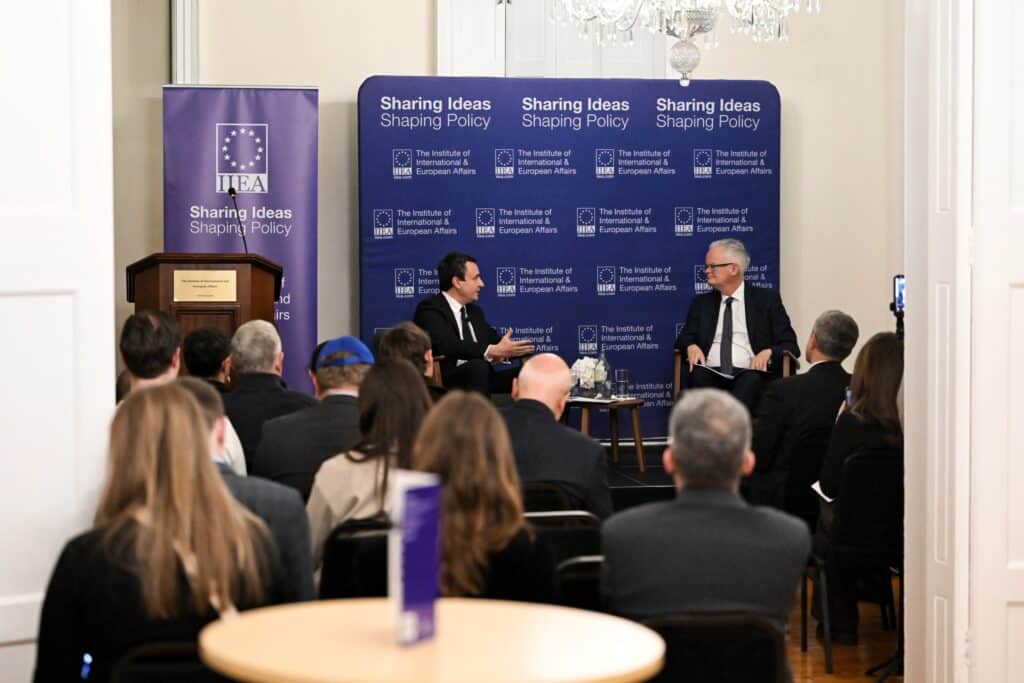
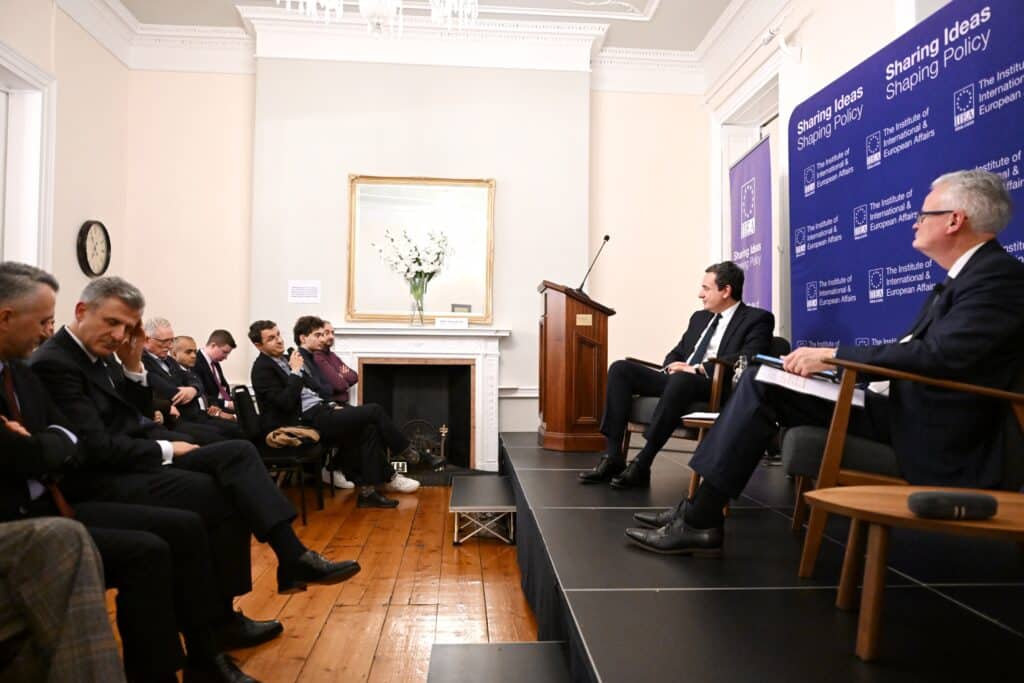
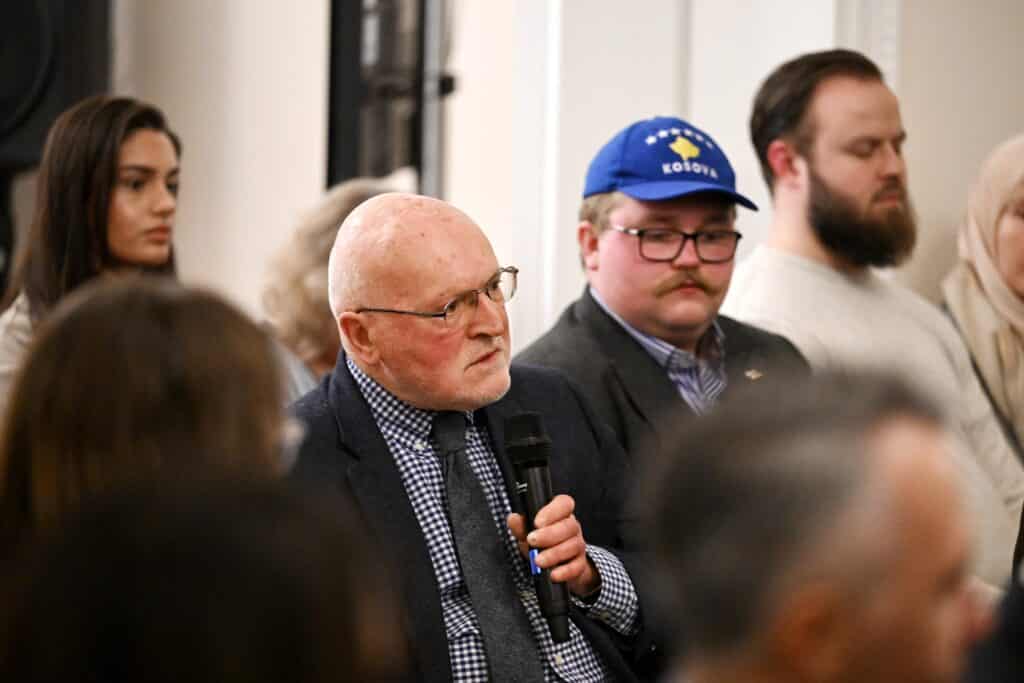
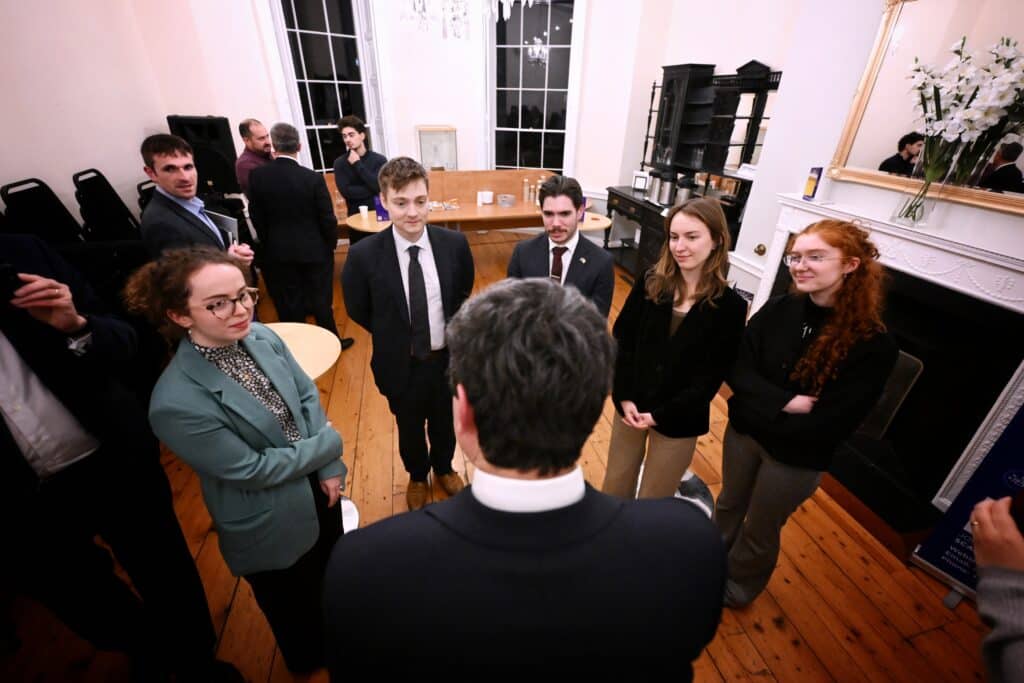
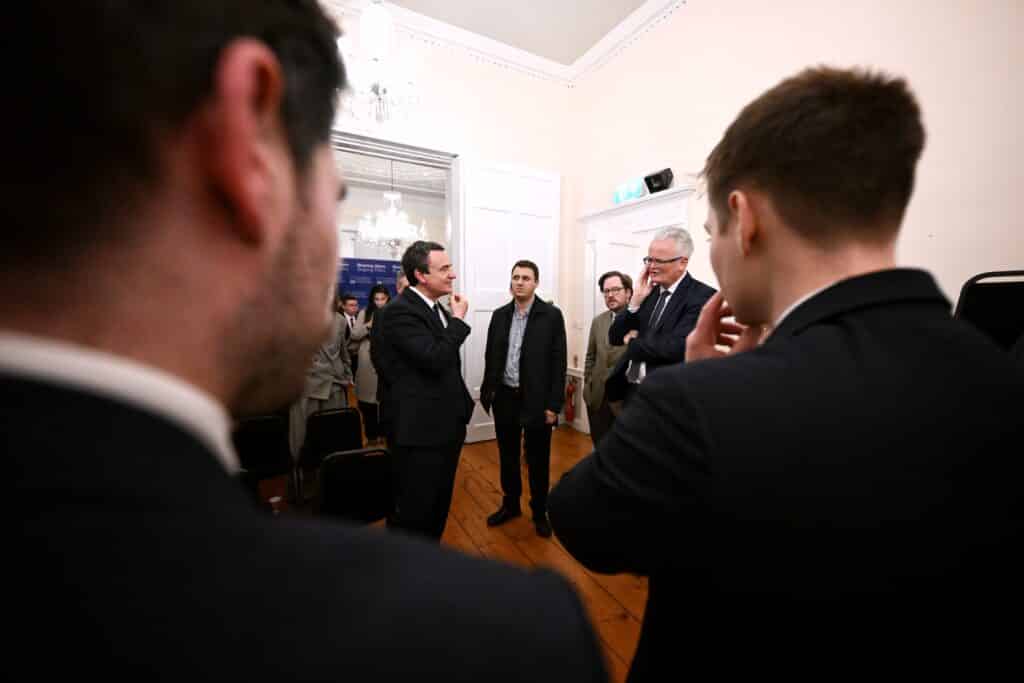
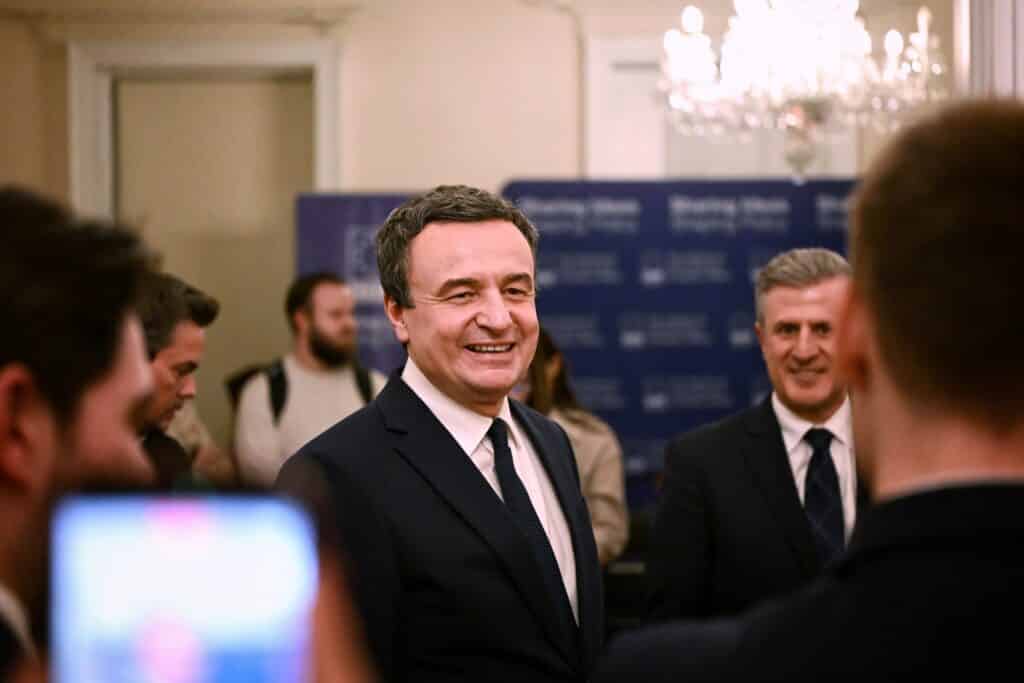
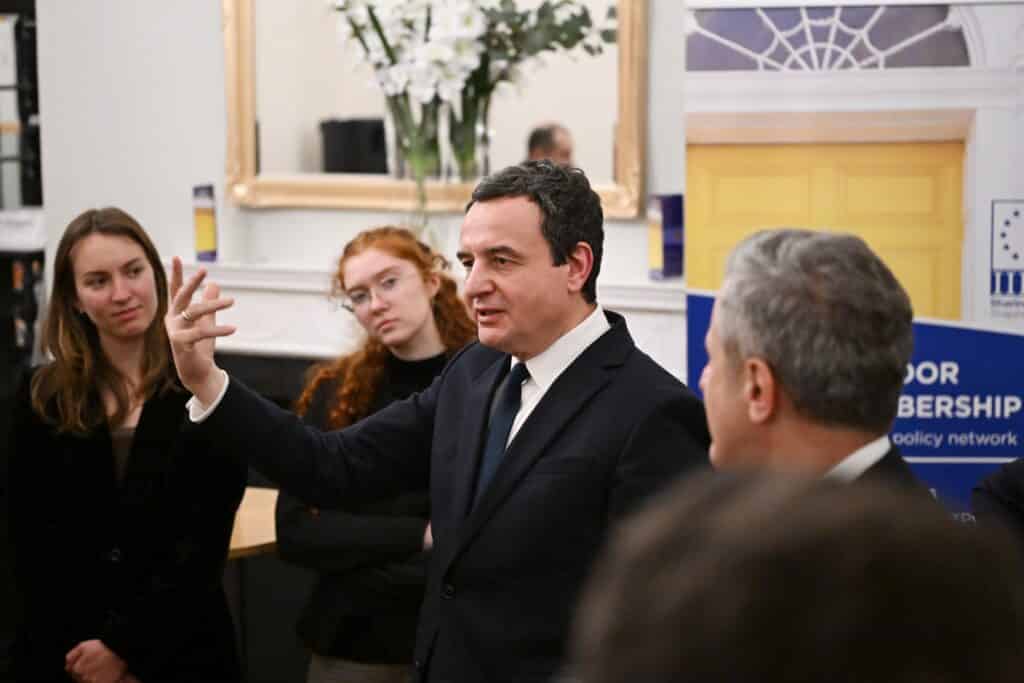
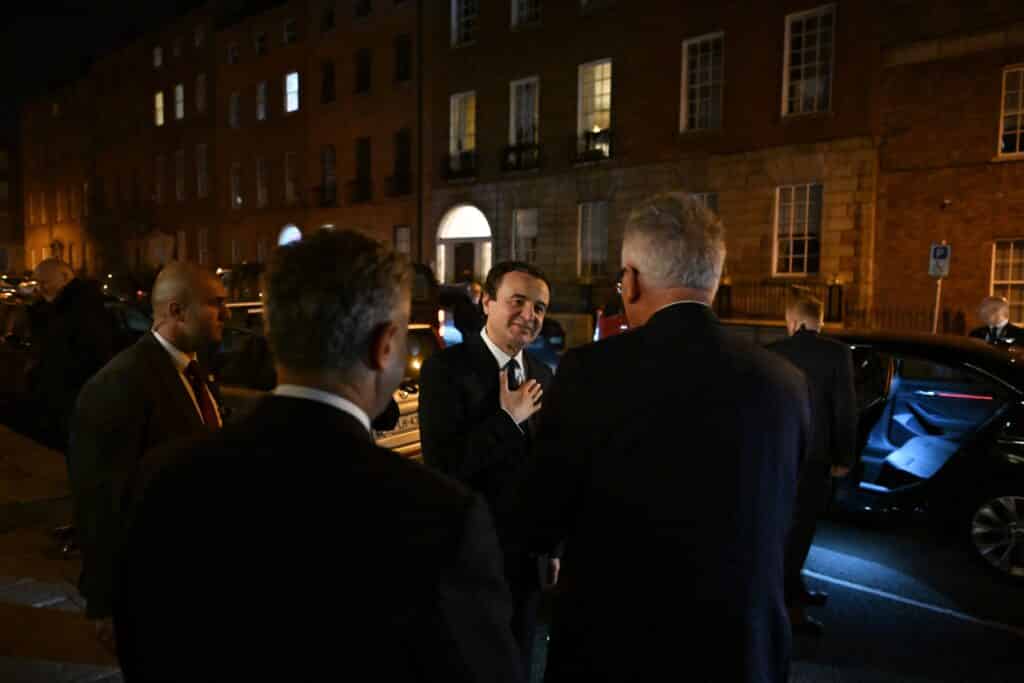
Kryeministri i Republikës së Kosovës, Albin Kurti, mbrëmë ishte i ftuar në Institute of International and European Affairs (IIEA) në Dublin për adresim dhe diskutim mbi temën: “Kosovo’s Journey: From Statehood to European Integration”.
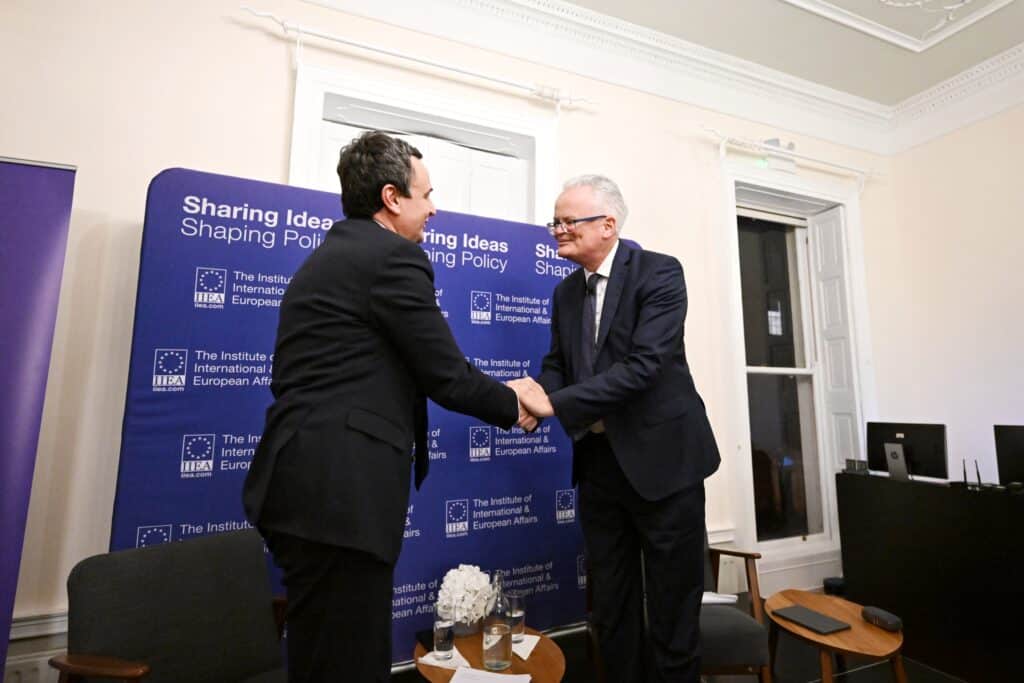
Para adresimit dhe diskutimit, kryeministri Kurti u prit në takim nga drejtori i përgjithshëm i IIEA-së, Mark Redmond.
Fjala hyrëse e kryeministrit Kurti:
Honorable Director General, Mark Redmond,
Dear representatives of the Institute of International and European Affairs (IIEA),
Dear students, distinguished guests,
Dear friends,
Ladies and gentlemen,
It is a great pleasure to be here in Dublin, and an honour to address you.
I began this week in France at the “Paris Peace Forum” and end it here in Dublin at the “European Political Community” Summit. From Paris to Dublin and across Europe, security is the main priority.
Ireland and Kosova share a deep appreciation of self-determination and national identity, pride in the extraordinary contribution of our diasporas, and the conviction that country’s independence and European integration can strengthen one another.
We also share a very beautiful human connection that dates back to 1928. At the age of eighteen, Gonxhe Bojaxhiu, born to Kosova Albanian parents originating from Prizren and Gjakova, came to Dublin to join the Sisters of Loreto, at Loreto Abbey in Rathfarnham.
Mother Teresa, as she would later be known, is a symbol of the Catholic tradition among Albanians in Kosova. Each year, thousands of pilgrims gather in the village of Letnicë in south-eastern Kosova to pray at the Church of the Assumption of the Blessed Virgin Mary, where Mother Theresa, at a very young age, got the call to devotion, first felt the calling to dedicate her life to God and to serve humanity.
I am especially pleased to be here during Ireland’s Presidency of the Council of the European Union. With enlargement once again a strategic priority for Europe, Ireland can help turn renewed momentum into concrete progress.
In Paris we discussed “Making Peace Last: Rebuilding Societies After War.” It brought to mind a lesson Kosova knows well: ending a war is the first part and securing a lasting peace requires a sustained effort by institutions and people to build opportunities, ensure wellbeing and offer a credible European future.
We are a European country. Indeed, our constitution is new, but our people, our language, some of our traditions and our culture are ancient. Joining the European Union is about unifying Europe. We want to contribute to a more united and secure Europe.
Our journey to statehood is one of struggle and sacrifices of many generations across centuries. Decades of repression and apartheid-like discrimination against Albanians culminated in a massive peaceful protest and then liberation war followed by NATO’s intervention in 1999 to stop Serbia’s genocide, the fourth one against Albanians since late 1800s.
We owe our freedom and independence to the resistance and fight of our people, and to the solidarity of democratic nations that refused to remain indifferent in the face of Serbia’s genocide. Ireland recognised our independence in 2008, the same month we declared it, and we remain forever grateful.
We did not let the injustices of the past to define the state we would become. We have built a democratic, citizens republic founded on human dignity, equal rights and the rule of law.
From 2008 until 2012 we had a supervised independence with an International Court of Justice opinion in 2010 saying that our independence did not violate international law.
Eighteen years after independence, Kosova has turned the contribution from the international community into a success story of building a democracy. We have competitive elections, an open market economy, a vibrant civil society, freedom of expression, assemble without fear and a generation that has grown up knowing only an independent Kosova.
These achievements reflect the daily work of citizens, civil servants, academia, journalists, entrepreneurs and civil society organisations who always expect more from their institutions. We know that democracy is a work in progress, and that the trust of citizens must be earned again and again. That is why we regard criticism and scrutiny not as obstacles, but as essential parts of democratic life.
Independent assessments reflect our democratic progress in our region. On corruption, Transparency International has moved us up 28 places. On the rule of law, the World Justice Project ranks us second in the Western Balkans for rule of law and first for order and security. On press freedom, Reporters Without Borders moved us up 15 places this year. V-Dem Institute classifies Kosova as an electoral democracy.
At a time when democratic standards are under pressure in many parts of Europe and beyond, this is an achievement that deserves recognition.
Our Constitution protects the rights of all citizens, with special provisions for minorities and especially the Serb minority. Membership in the Council of Europe would bring further benefits, including access to the European Court of Human Rights.
In this decade our economy has grown by more than four per cent annually on average, despite the pandemic, the energy crisis and inflation. Exports, investment and employment have increased, giving us greater capacity to support citizens.
We introduced child allowances and support for new mothers, made public higher education free of charge, increased pensions and the minimum wage, and expanded support for farmers and start-ups. Through e-Kosova digital platform, more than 330 public services are available online with another 400 services coming in the next two years. This matters particularly in a country with one of Europe’s youngest populations. Our young people are multilingual, tech savvy and entrepreneurial. They are not simply Kosova’s future. They are already shaping its present.
Dear friends,
There is another similarity between Ireland and Kosova: our diasporas. Ireland understands how people can leave their homeland and remain deeply connected to it.
Our diaspora sustained our families through difficult years, supported our struggle for freedom, and continues to contribute through investment, knowledge and networking. They live and work in the EU countries for decades. In this sense, our people are part of European Union long before our state and institutions join the EU.
When visa liberalisation entered into force on 1 January 2024, it meant far more than easier travel. For our young people in particular, it opened new possibilities to discover Europe, attend conferences, exchange ideas and build relationships with their peers across the continent, without the barriers previous generations faced.
This brings me to our European Union.
Our commitment to the EU reflects the values on which our Republic was founded and the direction our citizens have consistently chosen. We have a clear strategic and value based orientation. We want to join both NATO and the European Union.
Since our Stabilisation and Association Agreement with the EU entered into force in 2016, we have worked to align our laws, policies and institutions with European standards.
We have advanced reforms in energy, public administration, employment and industrial development, while accelerating the green and digital transitions. Together, these efforts are building a more competitive and inclusive economy, while the Common Regional Market serves as a stepping stone towards deeper integration into the EU Single Market.
We want our businesses to compete in wider markets, our universities to cooperate more closely with European partners, and our citizens to benefit from institutions that are transparent, effective and accountable.
Yet the accession process must be fair and credible.
We applied for EU membership on 15 December 2022, during the Czech Presidency of the Council. Ireland is the 8th presidency since then and we still remain the only country in the Western Balkans without a candidate status.
Our application should be assessed and we should start accession negotiations.
We have never asked for special treatment, only for the equal one.
We do have obstacles; our journey has never been easy, but with sincere commitment there is a pathway forward.
European integration and regional cooperation should reinforce one another. Unresolved political disputes should not prevent progress on reforms, beneficial to our citizens.
We have signed five agreements in the Berlin Process on freedom of movement with ID cards, on Recognition of Higher Education Qualifications, Professional Qualifications and on Access to study. All of them suffer from non-implementation.
Bilateral disputes should have their separate chapter on the accession process so that one issue should not stall progress on all the other areas that improve the lives of citizens. After all, we see EU integration and membership as a process that makes our country better.
We are aligned fully with the European Union’s Common Foreign and Security Policy (CFSP), including sanctions against Russia and provided support for Ukraine.
Making peace last also means confronting the threats that undermine it. The terrorist attack in Banjskë, Zveçan, on 24th of September 2023 and the attack on our critical infrastructure on 29th of November 2024 in Varaga, in Zubin Potok, showed that our northern neighbour still pursues an aggressive attitude and remains a primary threat to our national security. Accountability is essential not only for justice, but also for preventing future attacks.
Dear friends,
Ireland knows how EU membership can open new horizons while preserving a country’s identity, language, culture and voice. It also shows how smaller states can strengthen the Union.
Kosova wants to join in order to contribute, to a more secure and more prosperous Europe.
We trust Ireland, during its remaining Presidency of the EU and after it will support our quest for membership.
I would like to close with a personal reflection. When I was a student activist, we fought for the right to determine our future. Today, young people ask how far their ambitions can take them. Our responsibility is to ensure that we remove limitations and provide opportunities for their growth.
We have travelled a long road, and we are committed to the next chapter on EU accession.
Ireland is already a member of the European Union, and Kosova is not yet. But there is one European organisation where we already meet as equals: UEFA.
Our football matches have brought our people closer. Irish supporters have experienced our hospitality in Kosova, and I am confident Kosovar fans visiting Ireland next week will enjoy yours.
I wish you luck in the game, but not too much.
Thank you very much.