Prishtina, 30 September 2026
Honourable Deputy Prime Ministers, Ministers and Deputy Ministers,
Honourable Government officials and members of the media,
Dear citizens,
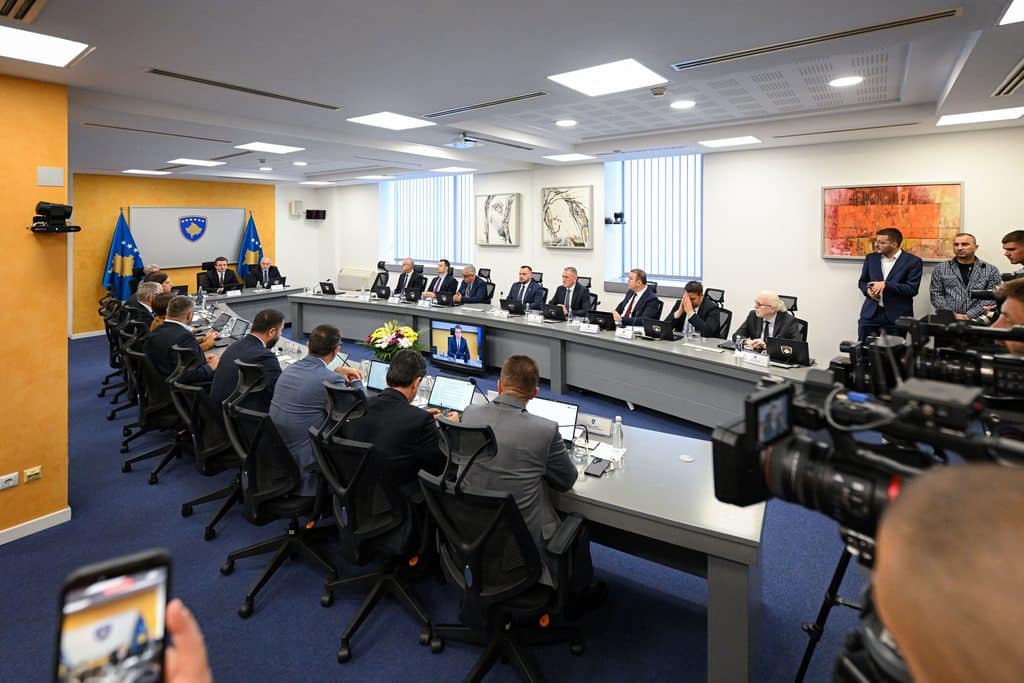
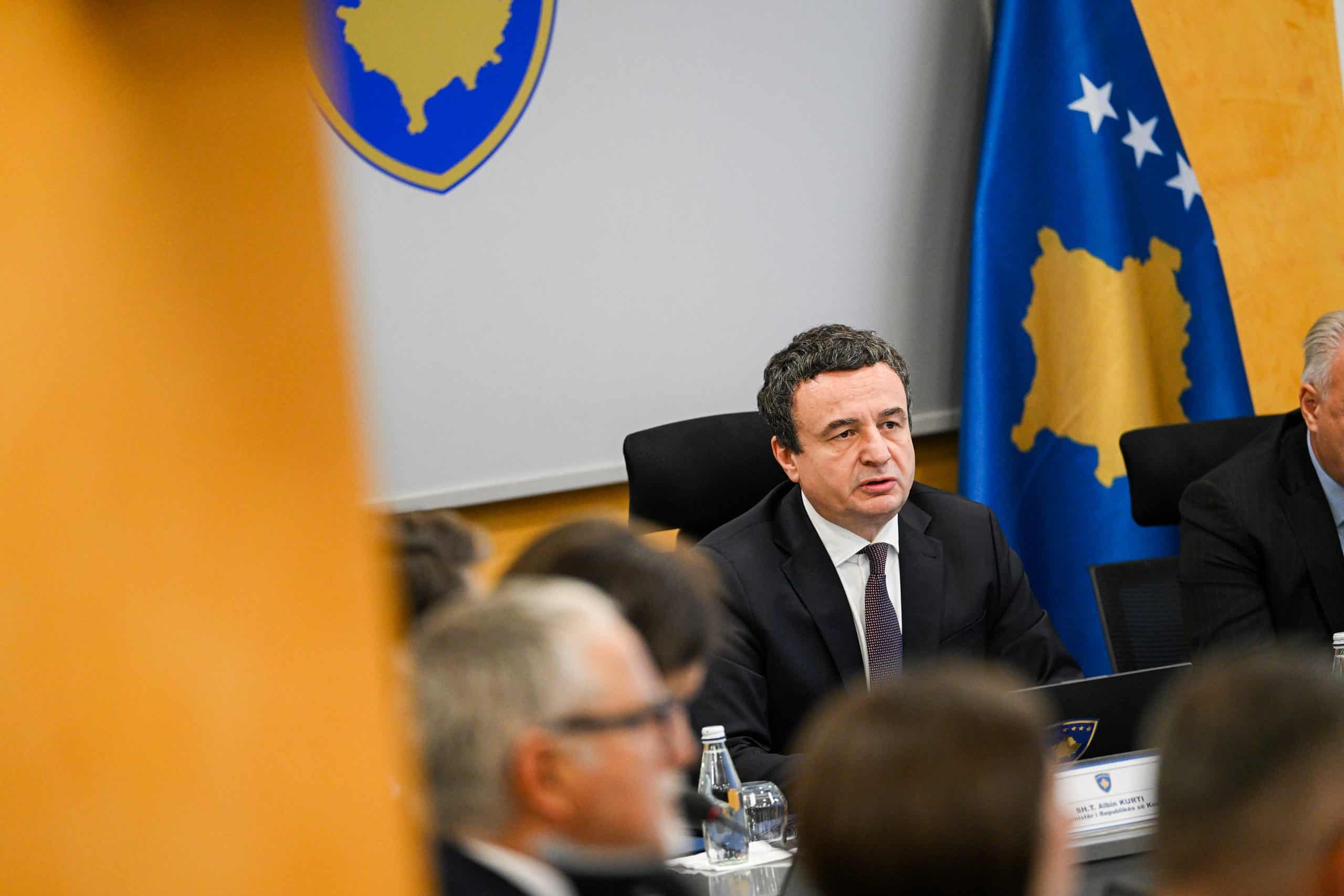
It is good to be meeting again at the third meeting of the new Government, or, more precisely, of the same Government with a renewed mandate.
Last night, at the Office of the Prime Minister, representatives of the political entities participating in the elections from Presheva, Medvegja and Bujanoc reached an agreement on a joint list, the “Albanian Coalition”, for the parliamentary elections in Serbia on 25 October. This is an important step towards unity, aimed at achieving a result that could make this agreement a historic one for Albanians in the Valley and beyond, in their efforts to fight discrimination and exclusion, as well as administrative ethnic cleansing.
Political unity within the Albanian Coalition is certainly not enough. We are all aware of the glaring injustice of the asymmetry in guaranteed rights. Serbs in Kosovo are guaranteed 10 of the 120 seats in the Assembly of the Republic, and, applying the same approach, Albanians in Presheva, Medvegja and Bujanoc should have at least five guaranteed seats in the Serbian Parliament, which has 250 seats. Guaranteed representation is a principle that should apply both in Kosovo and in our northern neighbour, with equal respect for equality and rights.
In any case, this is an important initiative on which we must build through mutual trust, hard work and dedication.
Dear citizens,
On the evening of Thursday, 24 September, I returned from a several-day visit to the United States of America, as part of the High-Level Week of the 81st Session of the United Nations General Assembly. It was an intensive visit, filled with meetings with leaders and senior officials from countries friendly to ours, as well as heads of international institutions and, of course, members of our valued diaspora in New York.
We raised a range of issues and held discussions on, among other things, the unjust judgment in The Hague, persons forcibly disappeared during the last war in Kosovo, and Albanians from the Presheva Valley, who, for the first time, were part of Kosovo’s state delegation. We also discussed the economy and development, security and defence, and our Euro-Atlantic future.
At every meeting in New York, I expressed my deep concern over the first-instance judgment of the Kosovo Specialist Chambers against former leaders of the Kosovo Liberation Army, Hashim Thaçi, Kadri Veseli, Rexhep Selimi and Jakup Krasniqi. The judgment is legally and morally unjust and historically and factually inaccurate. It is important to distinguish between what has been said and alleged and what has been proven and established by the court. The proceedings are not over, and we expect the appeal to address the injustices and shortcomings of this judgment.
Dear citizens,
On Sunday, I held separate meetings with the leaders of the Democratic Party of Kosovo (PDK) and the Democratic League of Kosovo (LDK), namely Messrs. Bedri Hamza and Lumir Abdixhiku, to discuss joint action in response to the unjust and severe judgment of 16 September, as well as the institutional, political and state challenges that lie ahead.
The declaration adopted by the Assembly of the Republic with 99 votes in favor is the first joint step. More than creating legal effects, it expresses the will of the people through their elected representatives. I therefore welcome and commend this initial step and call for close cooperation among parliamentary political entities on this matter of national interest, with actions carefully coordinated with the defence teams and relevant experts, so that we do not find ourselves in situations where our decisions could be used as an additional burden or to the detriment of Thaçi, Veseli, Selimi and Krasniqi.
As Prime Minister of the Republic of Kosovo, together with my colleagues in the Government and beyond, we will do everything within our knowledge and power to have this judgment corrected when the appeal is heard and decided.
The Kosovo Liberation Army emerged in response to Serbia’s repression, killings and massacres, mass expulsions, ethnic cleansing and genocide. It was the bearer of the people’s just struggle.
Honourable colleagues,
Dear citizens,
The Constitutional Court’s judgment, which established a new constitutional rule concerning the running of the deadline for electing the President, places us in an urgent situation that requires action.
We have an agreement with the Democratic League of Kosovo, but we know that it was breached and abandoned by six of its members of parliament, despite having been endorsed by their party’s leadership.
Beyond today, we have six full days to elect a new President. In addition to reaching a new agreement, electing the President remains possible. Consequently, new, repeated and unnecessary elections, which would be costly and have serious consequences, can certainly be avoided.
Therefore, let us sit down together, because although new elections would be triggered by the failure to elect the President, they would still not be elections for the President. Apart from once again leaving us without an Assembly, this time they would also leave us with uncertainty over the exercise of the presidential duties, while the Government would remain in a caretaker capacity.
Allow me to quote the third point of the Declaration, which was adopted with 99 votes in favor the day before yesterday: “The Assembly calls for the drafting of a joint state strategy, within which legal, institutional and diplomatic actions would be coordinated to protect and affirm the full historical truth about Kosovo’s just struggle for freedom and liberation.”
Citizens expect greater responsibility from us, while they need institutions that continue to function, an economy that continues to grow and projects that move forward. Kosovo cannot afford to waste time on unnecessary crises. We must understand clearly that there is no need to go to elections repeatedly and endlessly, only to end up back where we started.
With this declaration, we have opened a new chapter of domestic cooperation and coordination. However, every electoral process takes place in a new context, one on which we must reflect. This time, it would not produce a different result, but we now face new circumstances that demand greater responsibility towards the state. Under these new circumstances, the last thing our state needs is the looming threat of new elections. On the contrary, more than ever, our country needs institutional stability so that it can assume its many forthcoming responsibilities and fulfil its numerous duties and functions, develop a joint state strategy, and ensure success in both our legal defence and our diplomatic efforts, ultimately prevailing on the international stage.
At our previous meeting on Friday, we had 26 items on the agenda. Today, we have 35. Therefore, without further delay, let us proceed to consider them one by one.
Thank you for your attention!