Peja, 31 August 2026
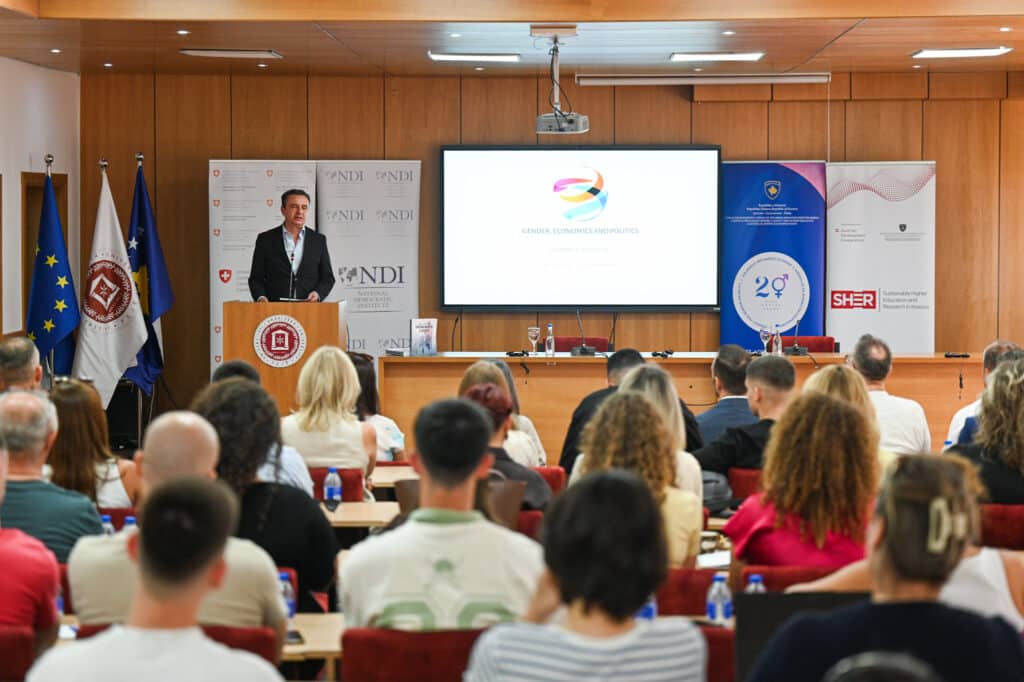
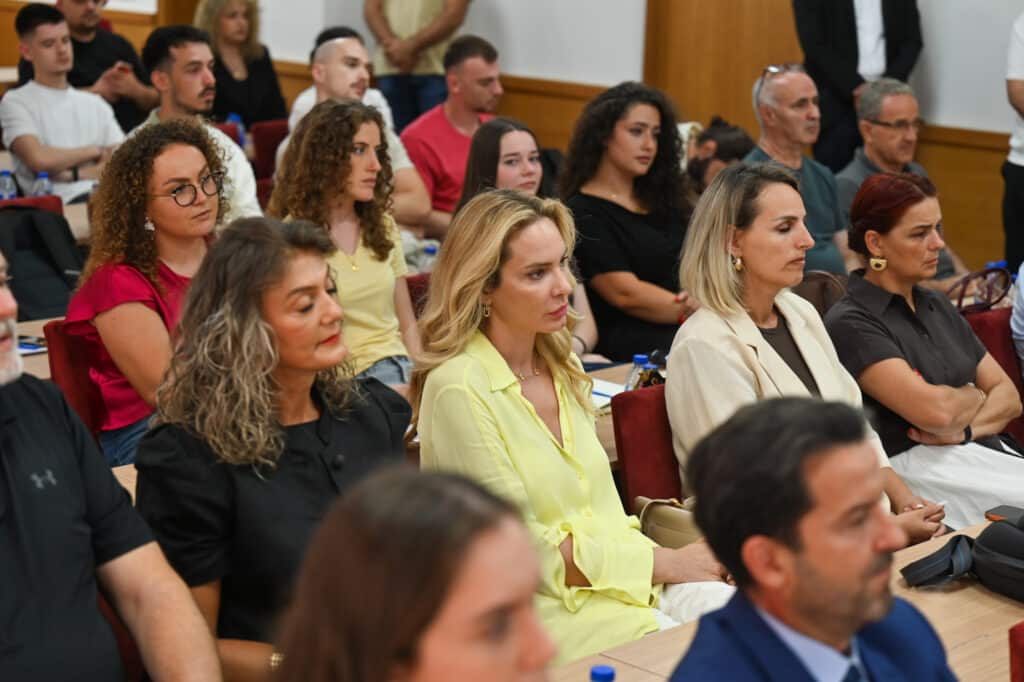
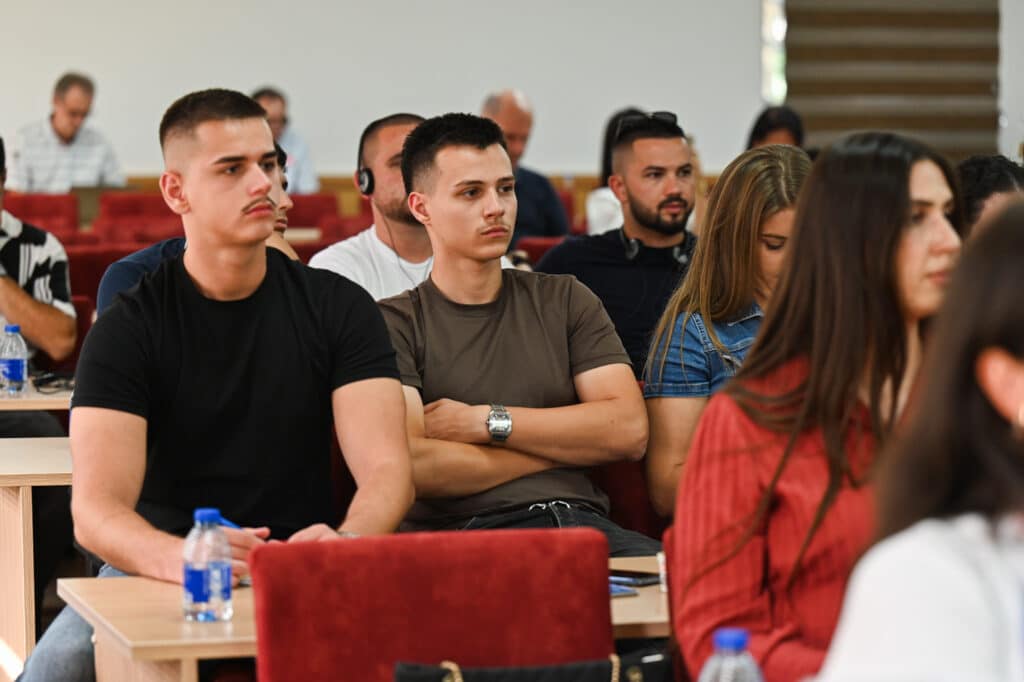
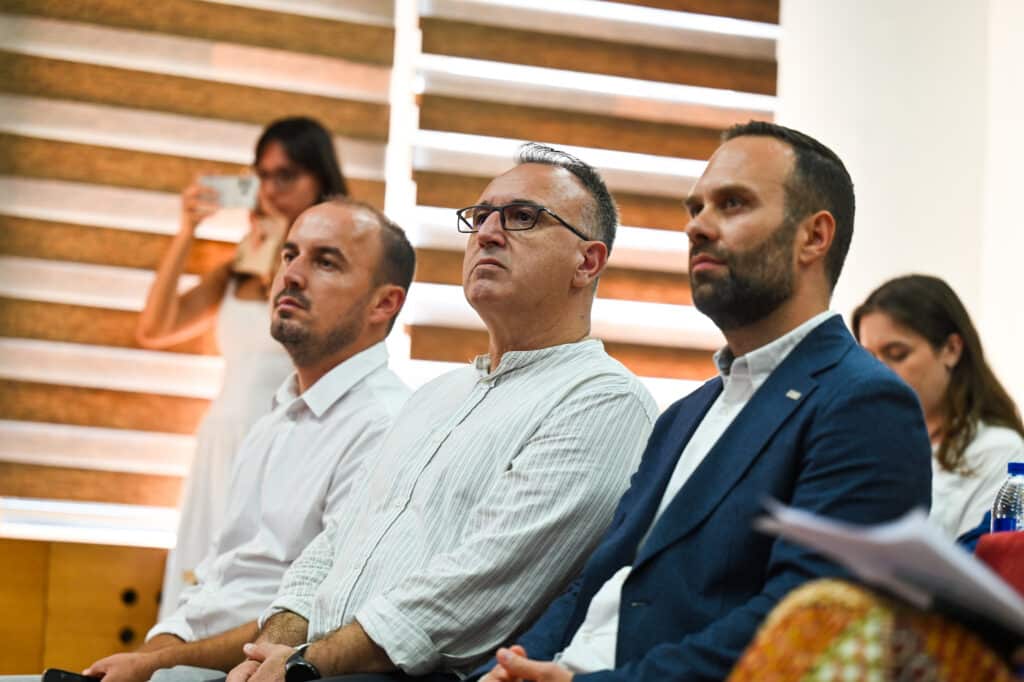
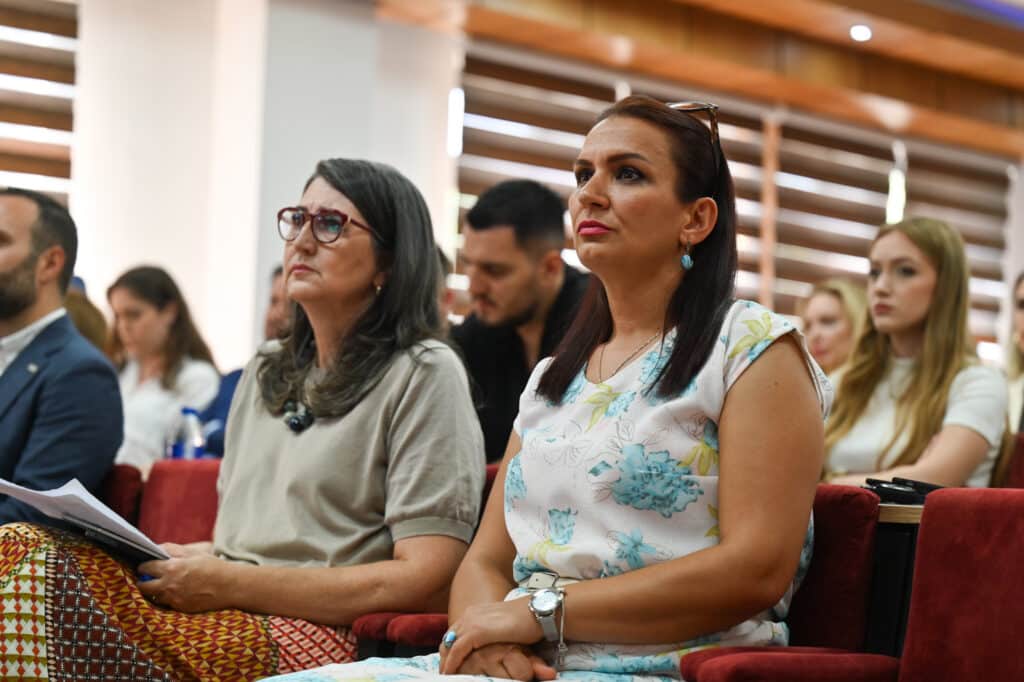
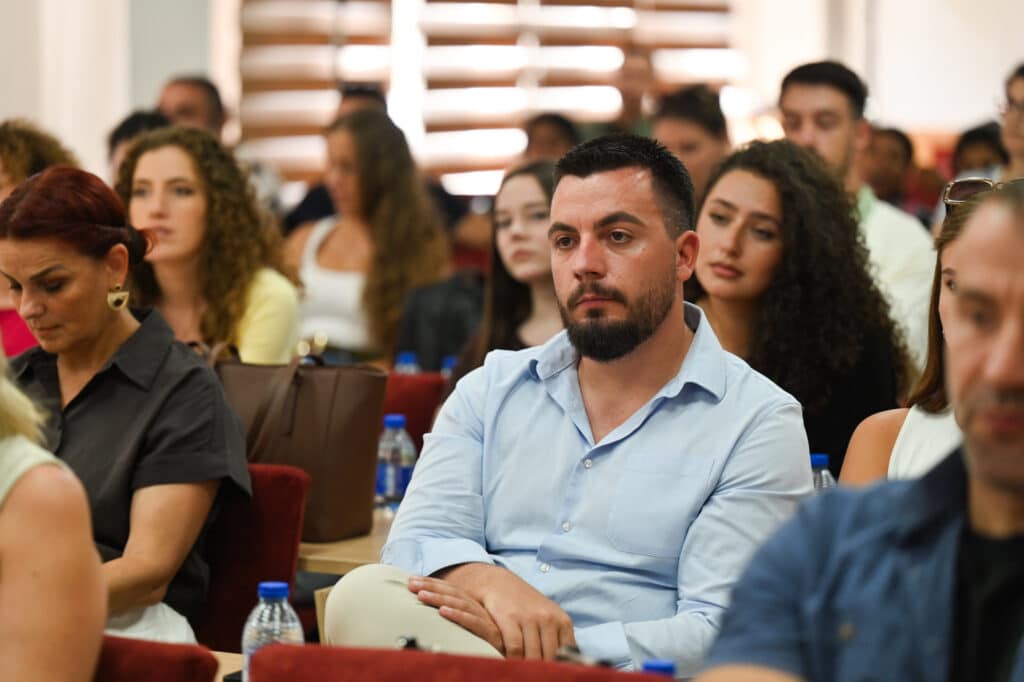
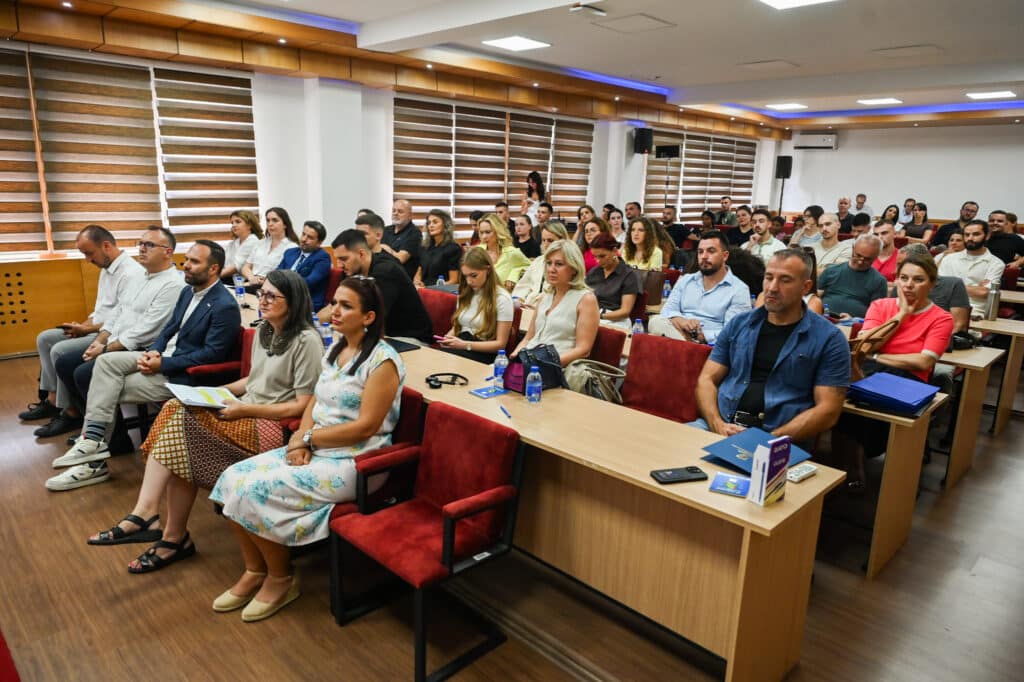
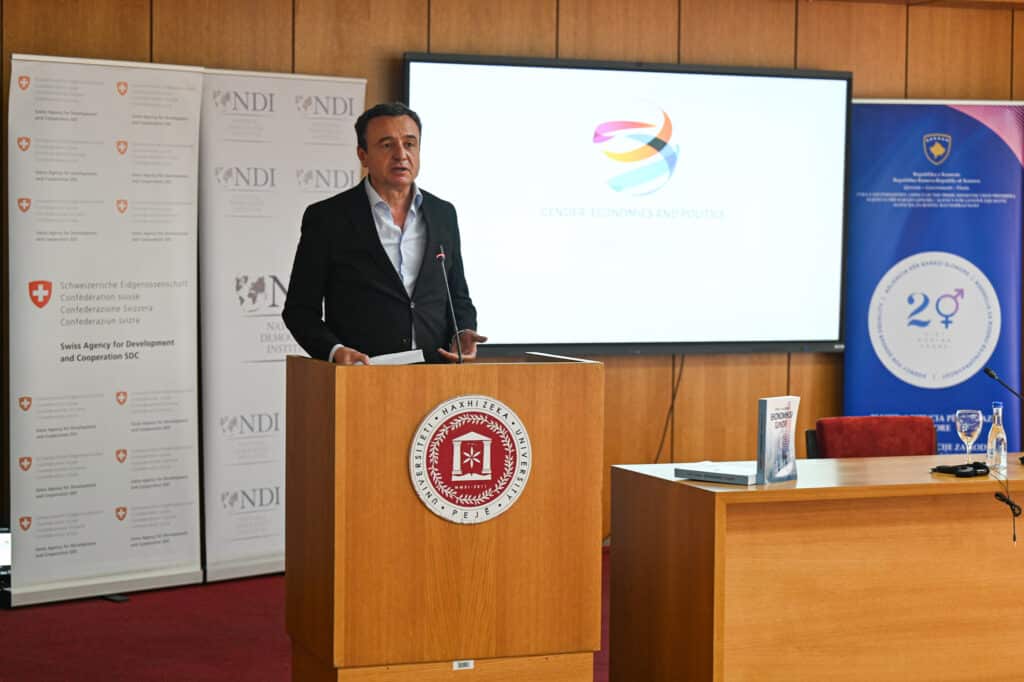
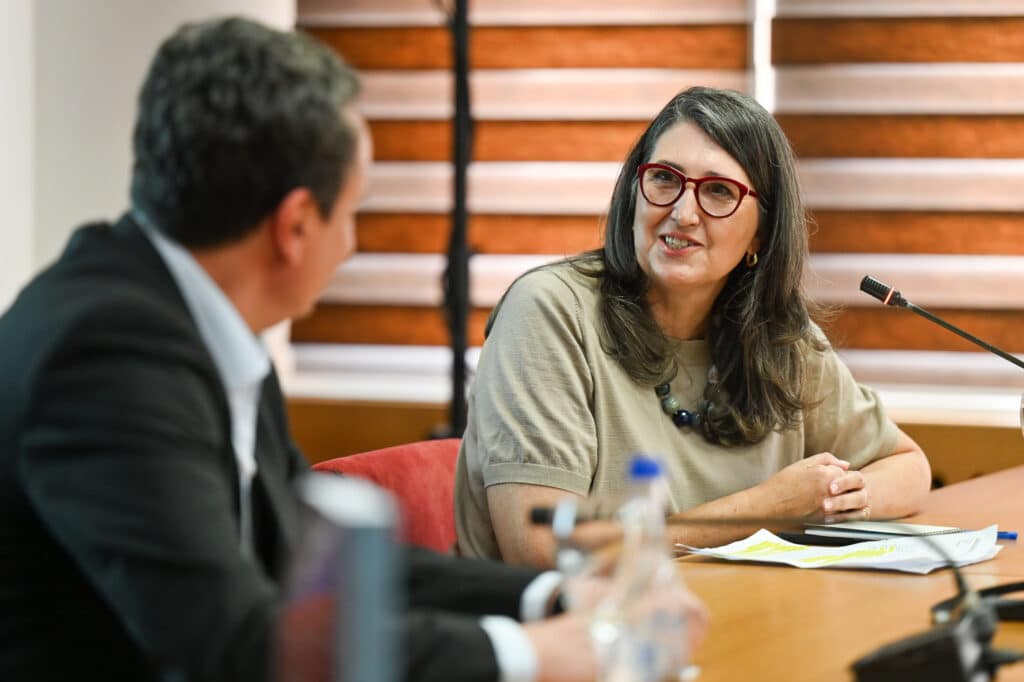
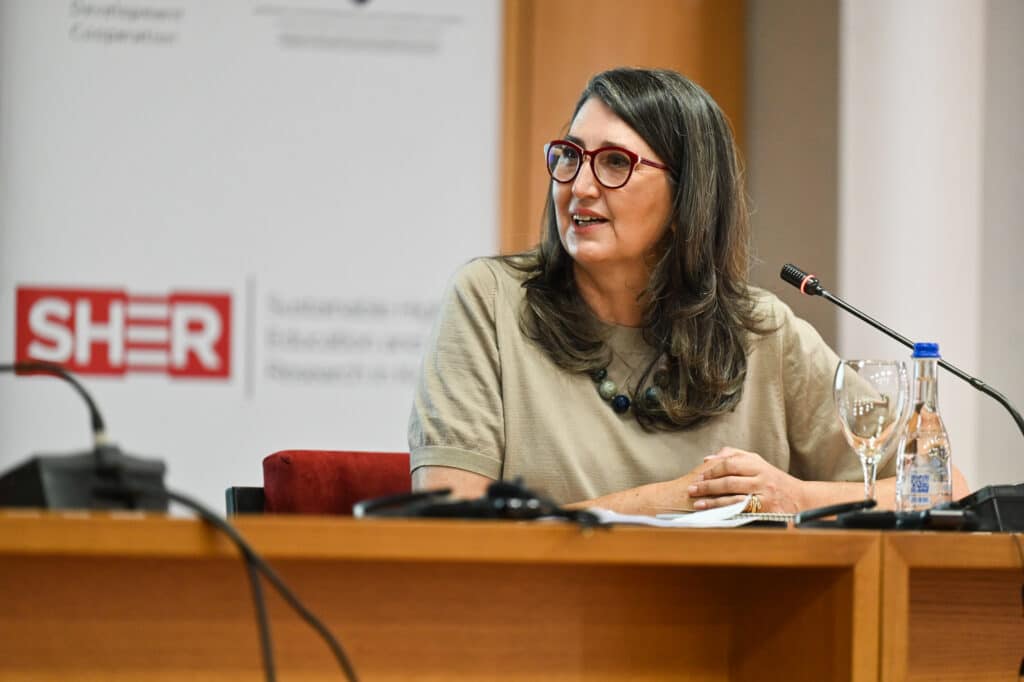
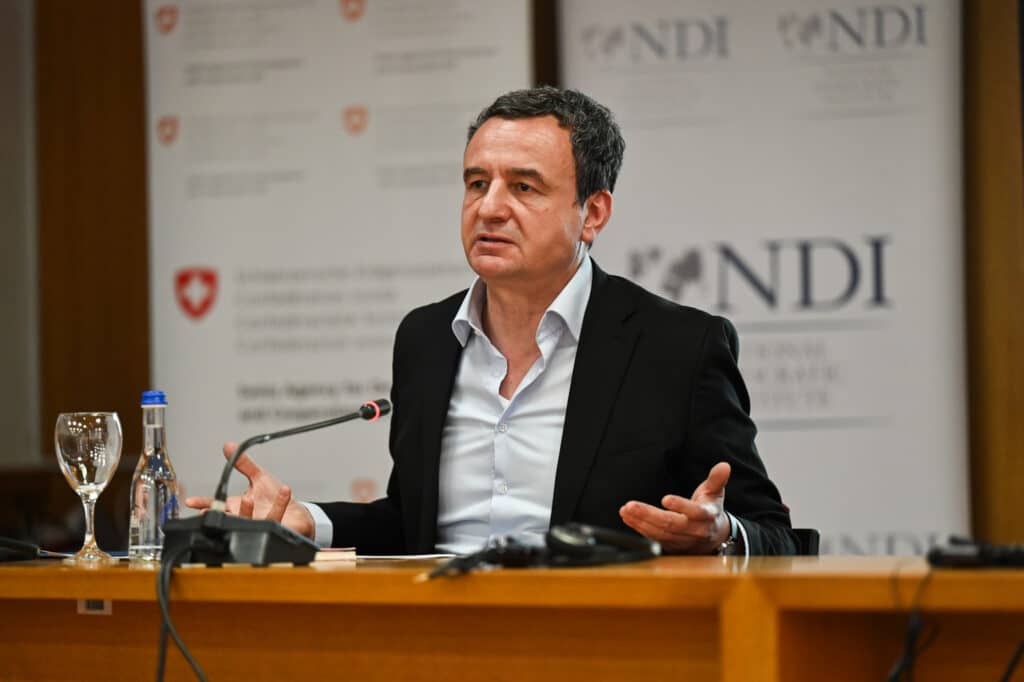
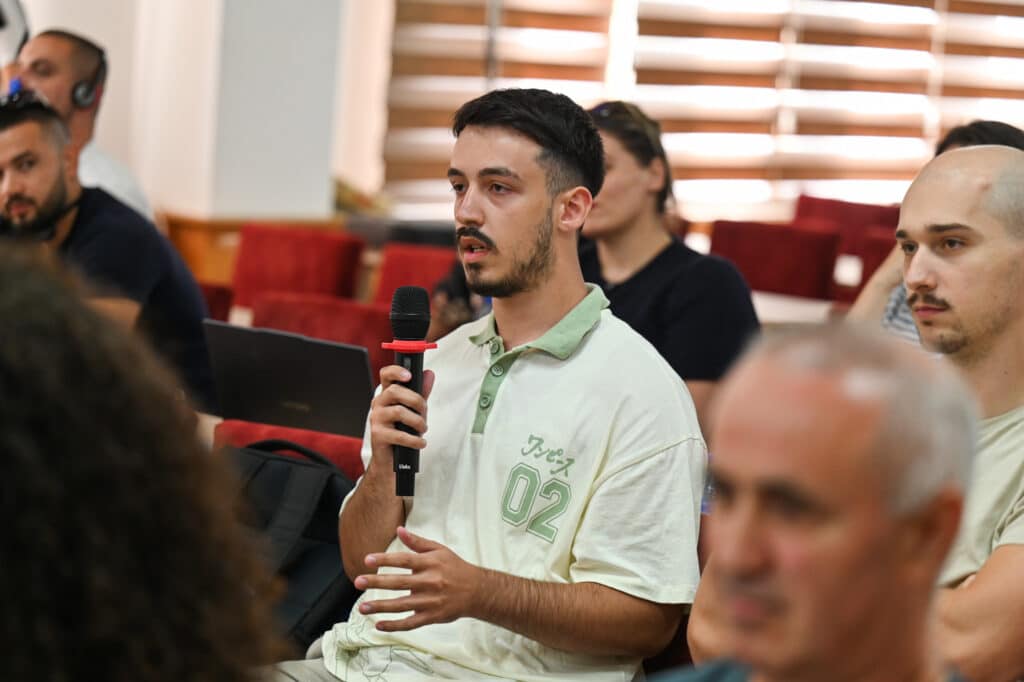
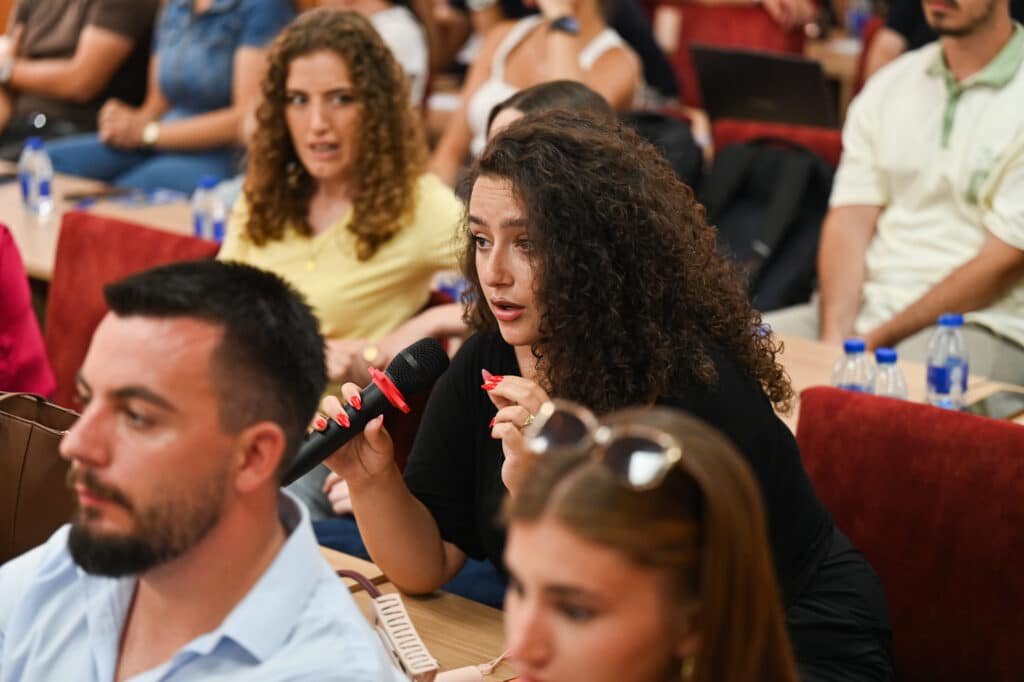
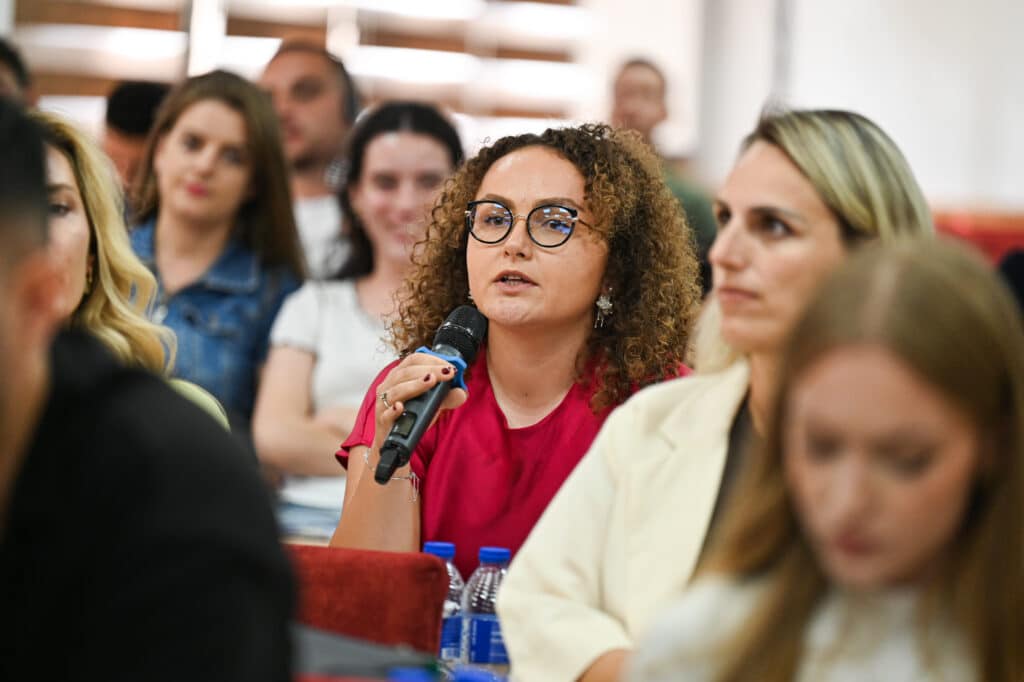
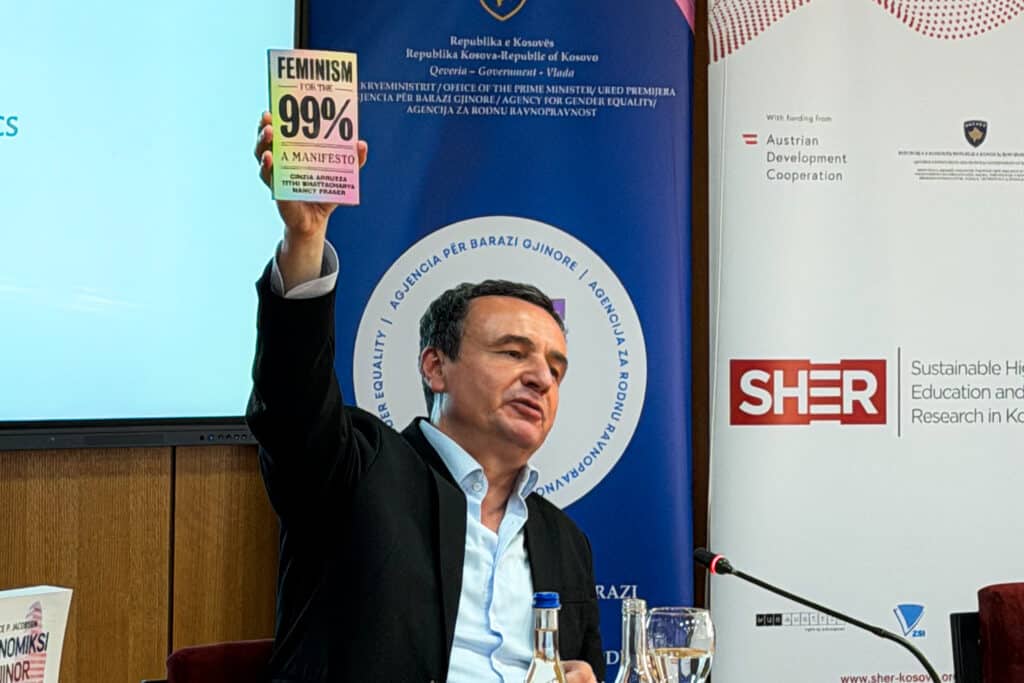
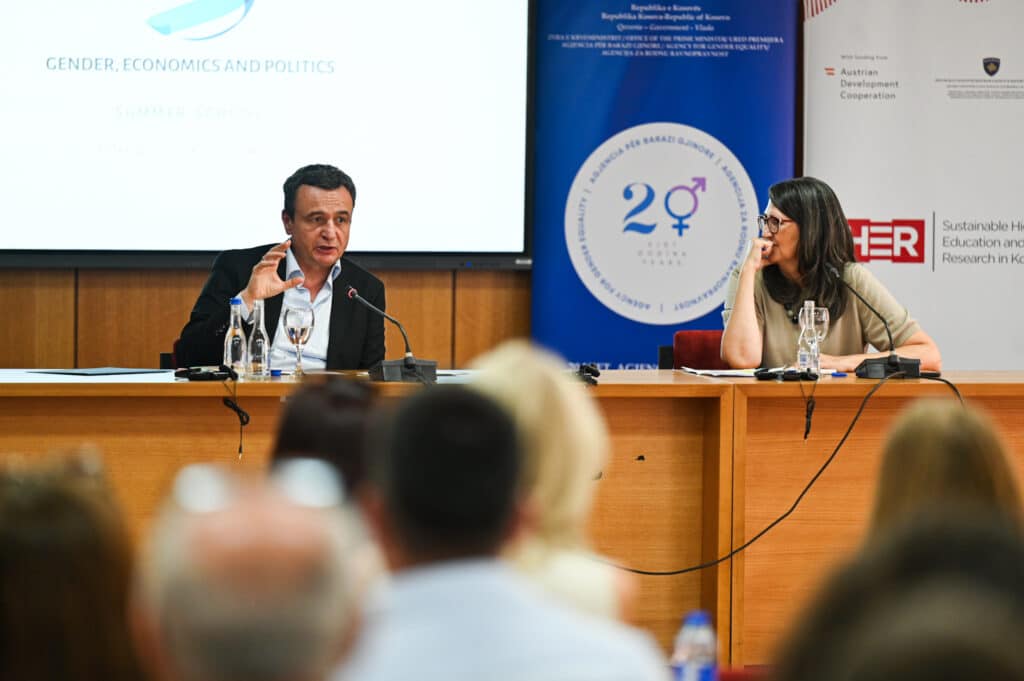
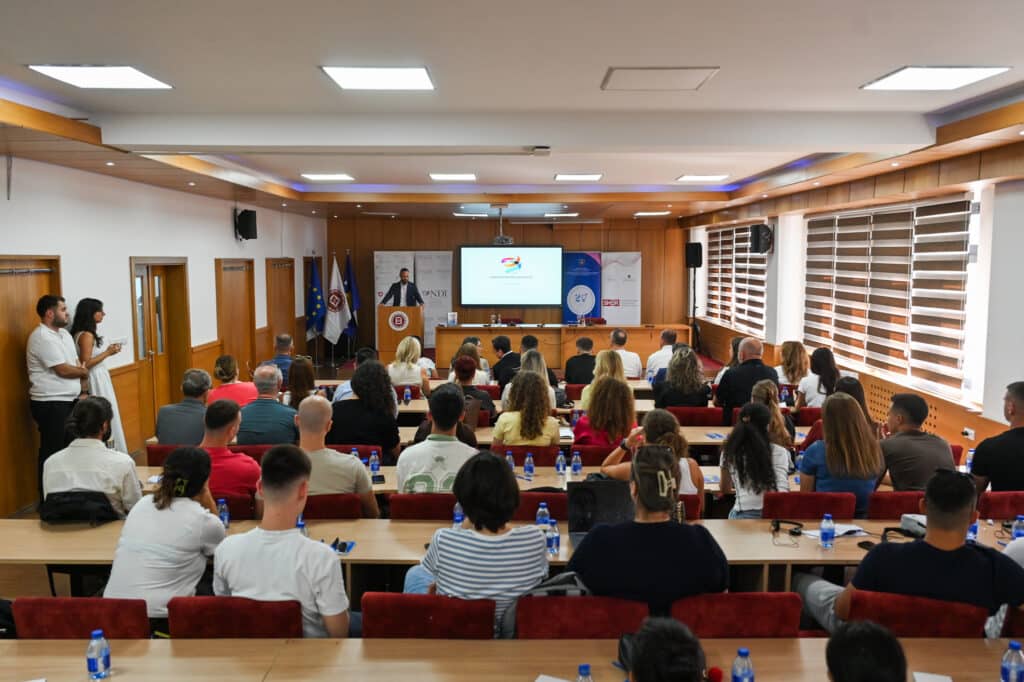
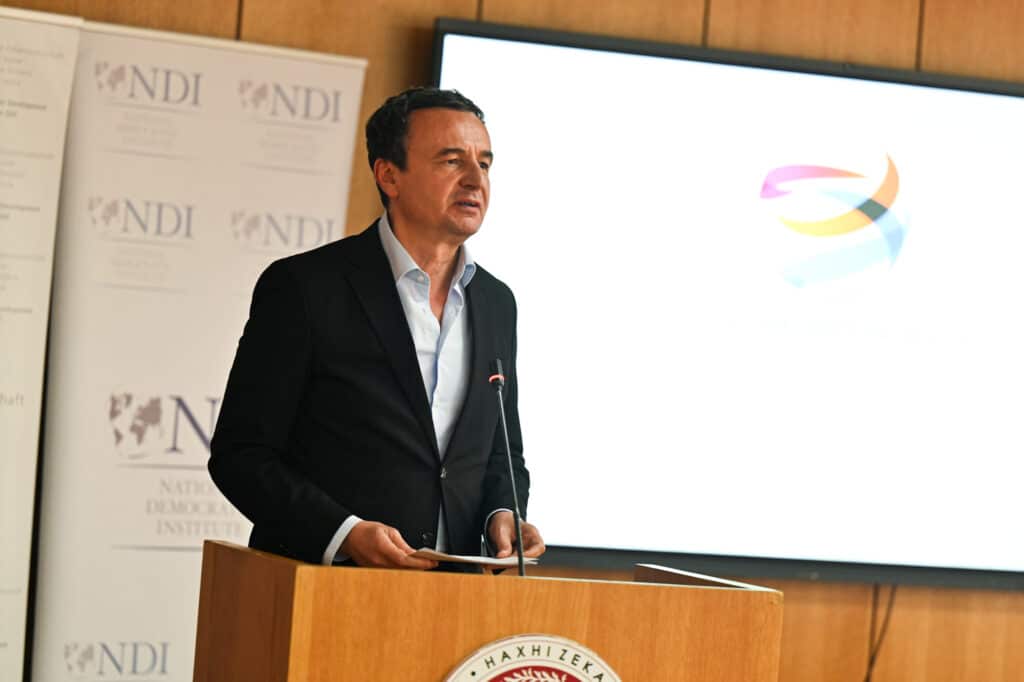
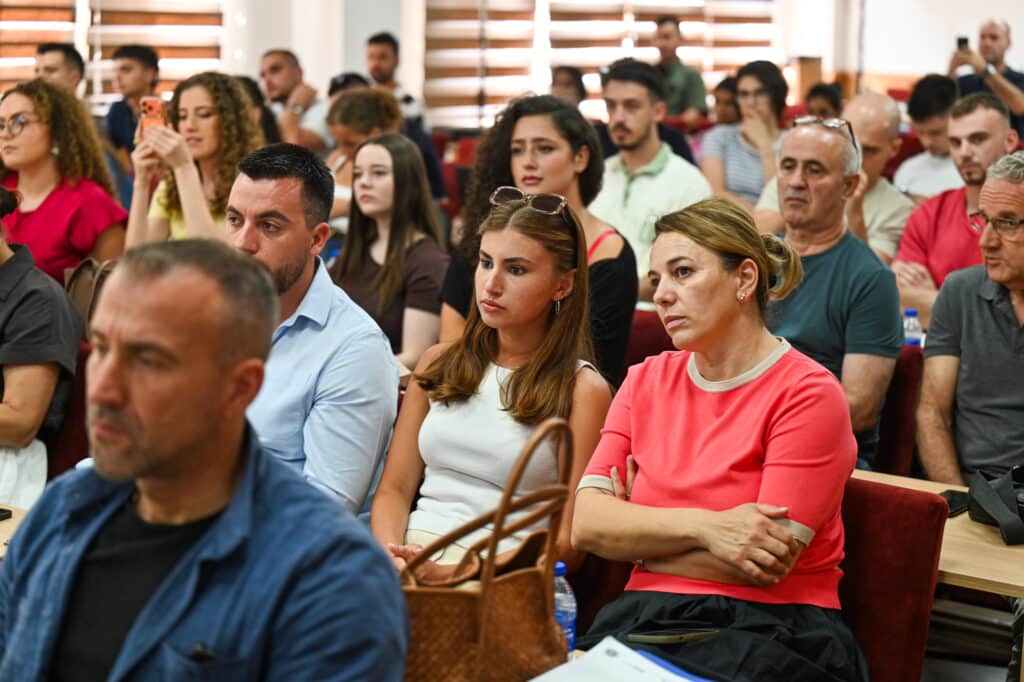
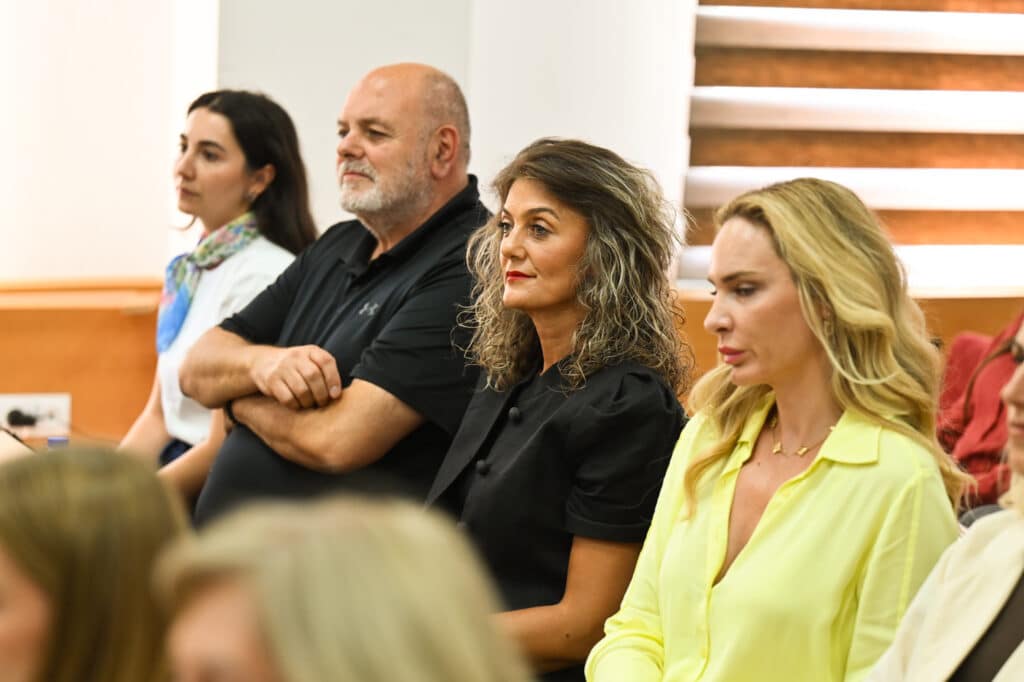
The Acting Prime Minister of the Republic of Kosovo, Albin Kurti, engaged in a dialogue with young people at the opening of the Summer School on Gender, Economy and Politics, held at the premises of “Haxhi Zeka” University in Peja.
He said he was pleased to be in Peja and particularly at a summer school that, as he noted, brings together three themes that are deeply interconnected: gender, economy and politics.
“Economy is not gender-neutral. Politics is not economically neutral. And democracy cannot be complete if half of society faces greater barriers to working, owning property, leading and making decisions. Therefore, for us, gender equality cannot be merely a legal obligation, nor can it be treated as a sectoral issue. It is a matter of social justice, economic development and the quality of our democracy,” the Prime Minister said.
Speaking about public policies, the Prime Minister added that in recent years the Government had sought to translate the empowerment of women and girls from principle into policies, budgets and measurable results.
“We have supported the employment of more than 12,000 women; we have used the SuperPuna platform to connect young people with the labour market, and of nearly 23,000 young people employed, 51 percent are women and girls; we have invested in education and scholarships for girls in STEM—Science, Technology, Engineering and Mathematics—with 7,277 scholarships awarded, of which 7,042, or 97 percent, went to girls; we have provided allowances for maternity and children; we have supported entrepreneurship and women in agriculture; and we have increased the representation of women in decision-making,” said the Prime Minister.
He further added that through the “Government for Families” programme, of more than 4,000 people employed from families in which no one had previously been working, 55 percent are women. Meanwhile, through the “Kosovo Generation Unlimited” programme, of more than 3,000 young people who have benefited from practical work placements, nearly 60 percent are women and girls.
“In 2021, we had 5,555 children enrolled in childcare centres. In the 2024/2025 school year, by comparison, this figure had reached 7,429, or around 33 percent more. Meanwhile, 74 childcare centres have been built or are under construction across Kosovo,” said the Prime Minister, adding that the objective is twofold: to ensure that children have access to early education, while parents—very often mothers in practice—have more time for employment, education and self-employment.
Addressing the students present from various fields of study, the Prime Minister said that gender equality is not the preserve only of those who work on gender equality.
“In a democracy, it is not enough to vote once every few years. Democracy requires citizens who participate, propose, criticize, conduct research and demand accountability. And especially to you, young people: democracy does not ask only for your vote, but also for your voice, knowledge and engagement. Do not wait for elections to participate, and do not wait for a position to have an impact,” said Acting Prime Minister Kurti.
Full Speech by Acting Prime Minister Kurti:
Honourable Rector of “Haxhi Zeka” University, Prof. Dr Armand Krasniqi,
Honourable Ms Edi Gusia,
Honourable representatives of the National Democratic Institute,
Honourable representatives of our international partners,
Honourable professors and students, participants of this summer school,
I am pleased to be back in Peja and, in particular, at this summer school, which brings together three themes that are deeply interconnected: gender, economy and politics.
Because economy is not gender-neutral. Politics is not economically neutral. And democracy cannot be complete if half of society faces greater barriers to working, owning property, leading and making decisions.
Therefore, for us, gender equality cannot be merely a legal obligation, nor can it be treated as a sectoral issue. It is a matter of social justice, economic development and the quality of our democracy.
And as we have said before: equality should not be seen only as a destination. Equality must be a starting point.
If two people are formally equal before the law, but one of them has less time because they bear the main burden of care within the family, has no property, has less access to finance and fewer employment opportunities, then legal equality has still not become equality in reality.
Therefore, public policies must address not only the rights we have guaranteed, but also the actual conditions under which those rights are exercised. Structural barriers are not private matters of the individual; they are matters of public policy. The state’s duty is to identify, measure and reduce them, so that equality before the law also becomes equality of opportunity.
In Kosovo, we have a paradox: girls and women achieve very strong educational results, while their economic potential continues to be underutilized. In other words, the problem is not a lack of talent, knowledge or willingness. The problem is the barriers.
And it is the state’s duty to ensure that barriers are not treated as an individual citizen’s fate, but as a matter of public policy.
Precisely for this reason, in recent years we have sought to translate the empowerment of women and girls from principle into policies, budgets and measurable results.
We have supported the employment of more than 12,000 women; we have used the SuperPuna platform to connect young people with the labour market, and of nearly 23,000 young people employed, 51 percent are women and girls; we have invested in education and scholarships for girls in STEM—Science, Technology, Engineering and Mathematics—with 7,277 scholarships awarded, of which 7,042, or 97 percent, went to girls; we have provided maternity and child allowances; we have supported entrepreneurship and women in agriculture; and we have increased the representation of women in decision-making.
Through the “Government for Families” programme, of more than 4,000 people employed from families in which no one had previously been working, 55 percent are women.
Meanwhile, through the “Kosovo Generation Unlimited” programme, of more than 3,000 young people who have benefited from practical work placements, nearly 60 percent are women and girls.
These figures may sound like labour-market statistics. But in fact, they show us that when public policy targets its efforts correctly, it can change the structure of opportunities, because when support is extended, opportunities expand.
At their core, these policies follow the same logic: greater economic independence means greater freedom to choose. And freedom of choice is both an economic and a democratic issue.
A woman who has her own income, her own bank account, property, a profession and employment opportunities, has greater autonomy not only in the market, but also within the family and society.
Therefore, we must also talk about the care economy. Unpaid work is work, even when it does not translate into wages. Caring for children, older persons and family members creates economic value even when economic statistics do not fully record it.
If this burden falls disproportionately on women, it translates into less time for employment, fewer opportunities for professional advancement and, ultimately, less economic independence.
The economy we see rests on this economy that we often do not see. And much of the work of this invisible economy is done precisely by women and girls.
Therefore, investing in childcare centres is not only an investment in children. Childcare is also an education policy and a social policy, but also an economic policy. It is also an investment in women’s employment.
In 2021, we had 5,555 children enrolled in childcare centres. In the 2024/2025 school year, by comparison, this figure had reached 7,429, or around 33 percent more. Meanwhile, 74 childcare centres have been built or are under construction across Kosovo.
For families receiving social assistance, we have also introduced a voucher programme for early childhood education, through which up to €150 per month per child is covered, together with transportation where available.
The objective is twofold: for children to have access to early education, and for parents—very often mothers in practice—to have more time for employment, education and self-employment.
Because time is also an economic resource. And when care time is distributed unequally, economic opportunities are also distributed unequally.
Another dimension is financial independence. Through maternity allowances, nearly 80,000 new mothers have received support, around two-thirds of them unemployed. More than 400,000 children have benefited from child allowances. But there is another effect that is sometimes not seen or sufficiently recognized: around 100,000 women have opened a bank account for the first time in their lives as a result of these measures.
A bank account may seem like a small administrative matter. But it is also an entry point into the financial system. It creates opportunities for saving, obtaining credit, doing business and, above all, greater independence.
The same applies to property. Through the affirmative measure for free registration of jointly owned property in the names of both spouses, we have seen a major change. From only 105 properties registered in 2016, the number reached 17,592 in 2024, while by the end of 2025 it had reached 31,124 properties registered in the names of both husband and wife.
Thus, in less than 10 years, joint property registration has increased nearly 170-fold.
In agriculture, we have allocated around €11 million to 5,655 women farmers through subsidies and grants. Meanwhile, through business-support programmes, we have sought to ensure that women are not only employees, but also owners, entrepreneurs and employers.
There are tens of thousands of women farmers working in agriculture. The Albanian word bujku is used only in its masculine form. Now, I am saying this aloud: the feminine form would be bujkneshë or bujkeshë, but we do not say it, because we are accustomed to bujku being a man. Yet there are tens of thousands of women whom the word bujku does not encompass.
Let us be clear: numbers are important, but numbers are not enough. Representation must be transformed into influence, policy into results, and budgets into change.
But, of course, we need data, because what is not measured properly is difficult to address properly.
In addition to knowing how many people have benefited from a given programme, we need to know how many are women and how many are men, which municipalities they come from, which communities they belong to, whether they come from rural or urban areas, what age they are, and whether the support has actually changed their position. Because an average may show progress while at the same time often concealing inequality.
And this brings us to you.
Dear young women and young men,
You are here from economics, law, political science, technology, journalism, sociology and other fields. This is very important, because gender equality is not the profession only of those who work on gender equality.
The economist must measure it, the lawyer must protect it, the journalist must demand accountability for it, and the policymaker must translate it into decisions.
In a democracy, it is not enough to vote once every few years. Democracy requires citizens who participate, propose, criticize, conduct research and demand accountability.
And especially to you, young people: democracy does not ask only for your vote, but also for your voice, knowledge and engagement. Do not wait for elections to participate, and do not wait for a position to have an impact.
Because democracy is not inherited as a finished product from one generation to the next. Every generation must protect it, expand it and make it better.
And the future is not something that simply awaits us. It is shaped every day by the decisions we make, the injustices we reject and the opportunities we create for one another.
And you are not only the generation that will inherit Kosovo; you are the generation that is shaping it.
Therefore, today I have not come only to speak to you, but also to hear from you.
Thank you for the invitation!