
Prishtina, 8 April 2026
Honorable Member of the Assembly of the Republic of Kosovo, Mr. Erxhan Galushi,
Honorable Deputy Prime Minister of the Government of the Republic of Kosovo, also responsible for Minority Affairs and Cooperation, Fikrim Damka,
Honorable Minister of Regional Development, Rasim Demiri,
Honorable Deputy Minister in the Ministry of Sports and Youth, Sylejman Elshani,
Honorable Adviser at the Ministry of Foreign Affairs, Sejnur Veshall,
Honorable former MP, long-standing community leader, Albert Kinolli,
Honorable Deputy Minister of Local Government Administration, Arton Konushevci,
Ladies and Gentlemen,
Sisters and brothers,
Dear attendees,
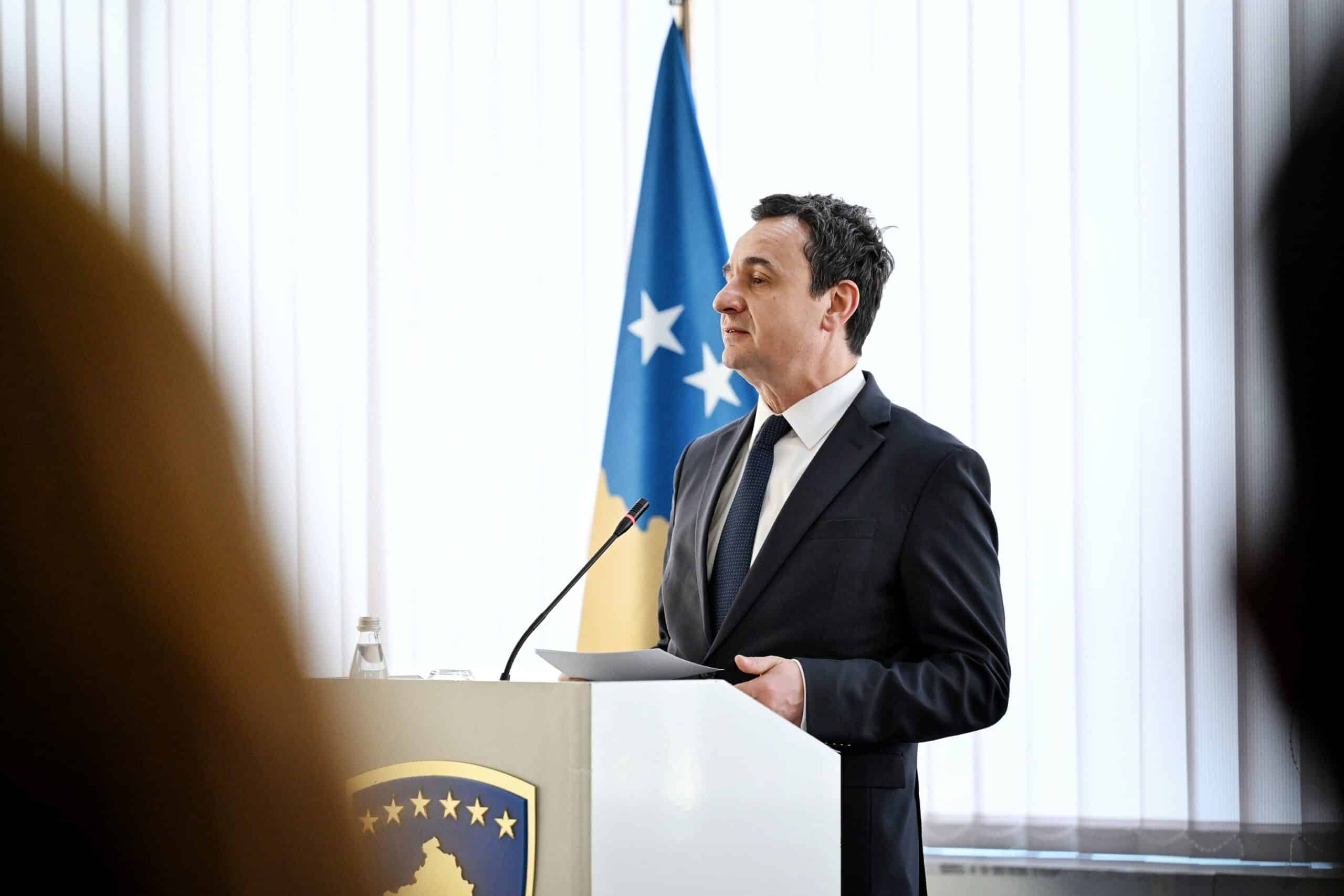
It is an honor and a pleasure for us to be together today, and allow me at the outset to wish you all a happy Roma Day. Congratulations!
We strive with everything we know and can do to ensure as much goodwill and solidarity, cooperation and joint action among us as possible.
Hatred has no place among us. Not because we do not know the world, but because we have experienced it more deeply than many others. In the Romani language, as far as I am aware, the word ‘hatred’ does not exist, not for lack of vocabulary, but as testimony to a culture that has chosen to live beyond it.
Dear attendees,
Today, on International Roma Day, we do not merely mark a date, but reflect on the essence of our society. The strength of a society is measured by the voice it gives to those who often remain in silence.
The representation of the Roma community is not merely symbolic; it is a conscious responsibility. When a documentary film such as “HORO ANO BORO” by director Benjamin Menekshe and producer Eroll Bilibani represents Kosovo in Berlin, it gives voice to that representation. It does not merely tell stories, but becomes testimony to the power of cultural diplomacy, where a community appears not with noise, but with spiritual depth.
The decade is also the decade of the Roma, because the decade is one of education. From scarcity to opportunity, today the Roma of Kosovo have three doctoral candidates. We must especially pay tribute to Roma women and girls, who are often the strongest bearers of resilience. Around 70% of graduates from the Roma, Ashkali and Egyptian communities are women, testimony to the strength, hope and continuity of these communities.
In sport and in the economy, we have opened new paths. For the first time, we have supported a female boxer and two new businesses from the Roma community, showing that investment in talent and initiative translates into development and genuine social inclusion.
From the “Nexhip Menekshe” Theatre to the poetry of Kujtim Pacaku, from Terzimahalla, a torchbearer in the defense of Roma culture, to the first Albanologist Nysret Seharoj; every voice, every pen, every creative act is a light that dispels the darkness of oblivion. Culture and knowledge are not merely a treasure of the past, but the foundation of freedom and dignity.
Today, we have so many books in the Romani language that the entire Balkan region looks at us with admiration. With the support of the Ministry of Culture, we have subsidized the addition of titles to the Roma mini-library, turning the book into a living bridge between generations. Because a language that is written is an identity that is not lost. Spiritual heritage does not survive on its own; it is preserved, cultivated and strengthened through cultural activities, which today have our continuous support.
As Rousseau said, “Man is born free, but everywhere he is in chains.” Free at birth, then in shackles thereafter. Every step toward recognition and equality is a step toward earned freedom, and the Government of Kosovo, through policies on education, social inclusion and business support, shows this freedom in action. Scholarships, employment and learning centers are bridges linking the present with the future, empowering the Roma, Ashkali and Egyptian communities.
The official recognition of the Romani language in Prizren and Gracanica, and optional instruction in schools, are not merely bureaucratic acts; they are testimony to cultural justice and respect for dignity. And respect for dignity comes precisely from respect for identity. Through these, each voice gains weight, and education and culture come together in building a society where diversity is not merely a source of wealth, but bears the harmony and spiritual strength of the community.
Let us build a society where every voice has its place, every culture is honored and every dream finds its freedom.
Bahtalo Romano Dive! (Happy Roma Day!)