Prishtina, 10 July 2026
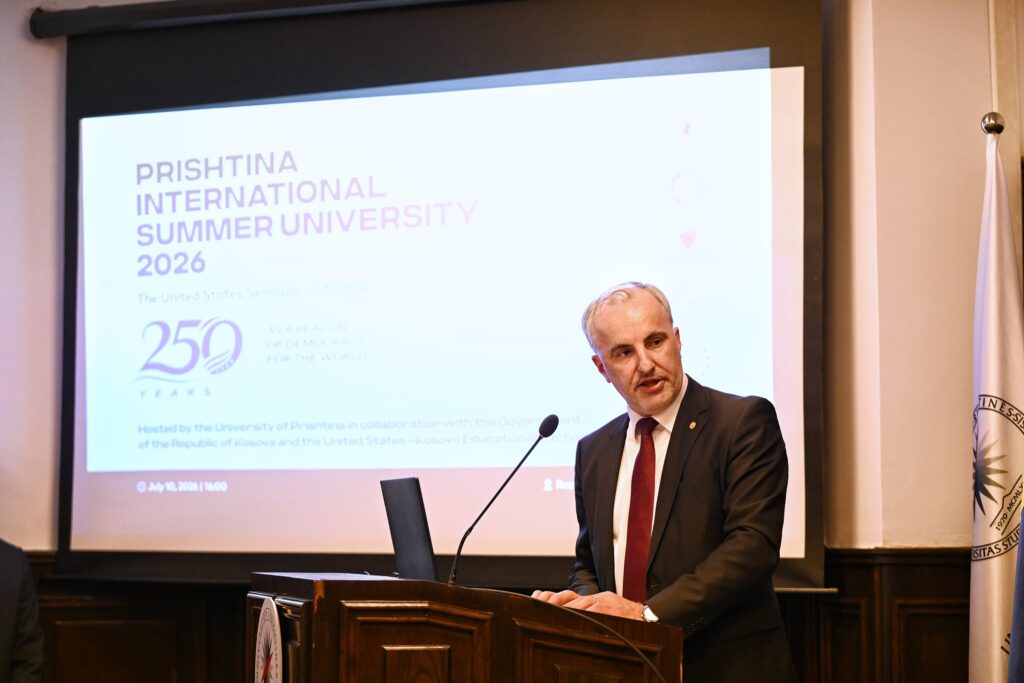
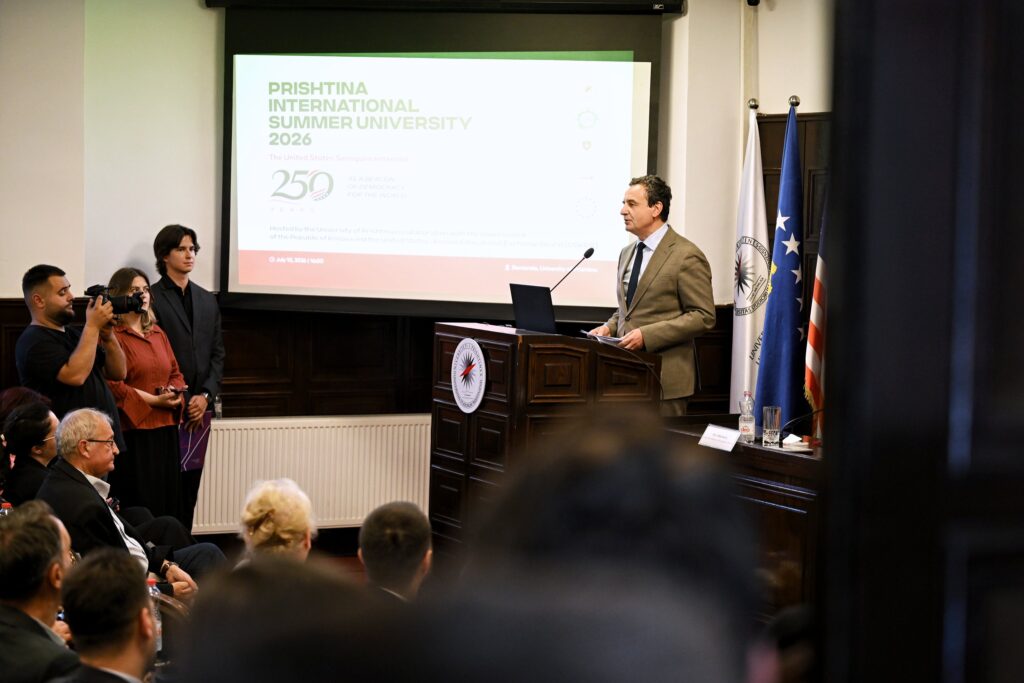
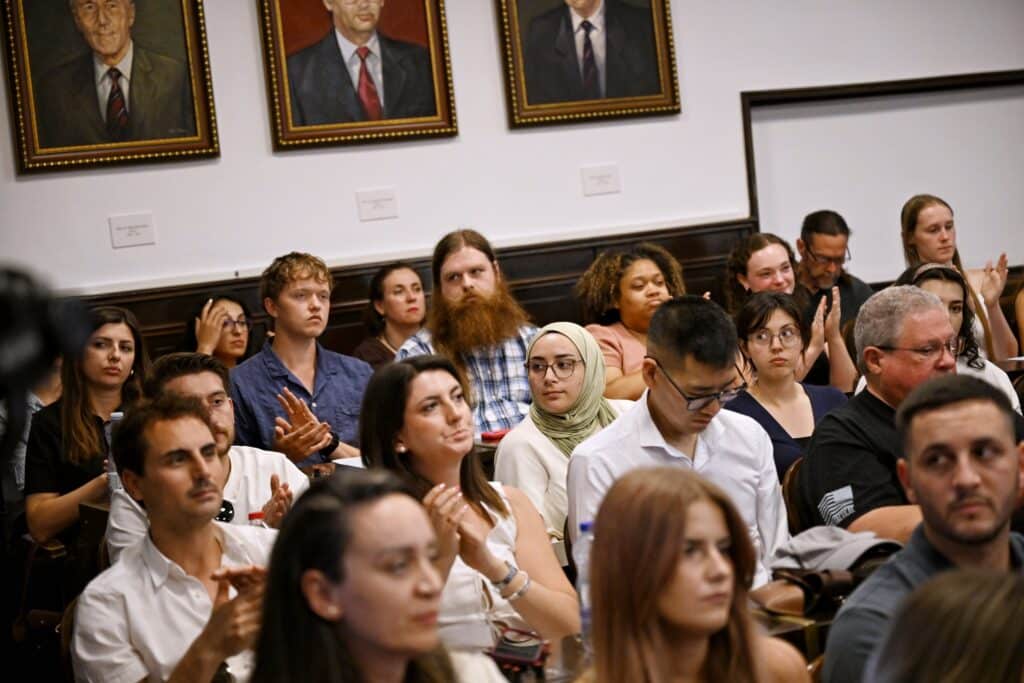
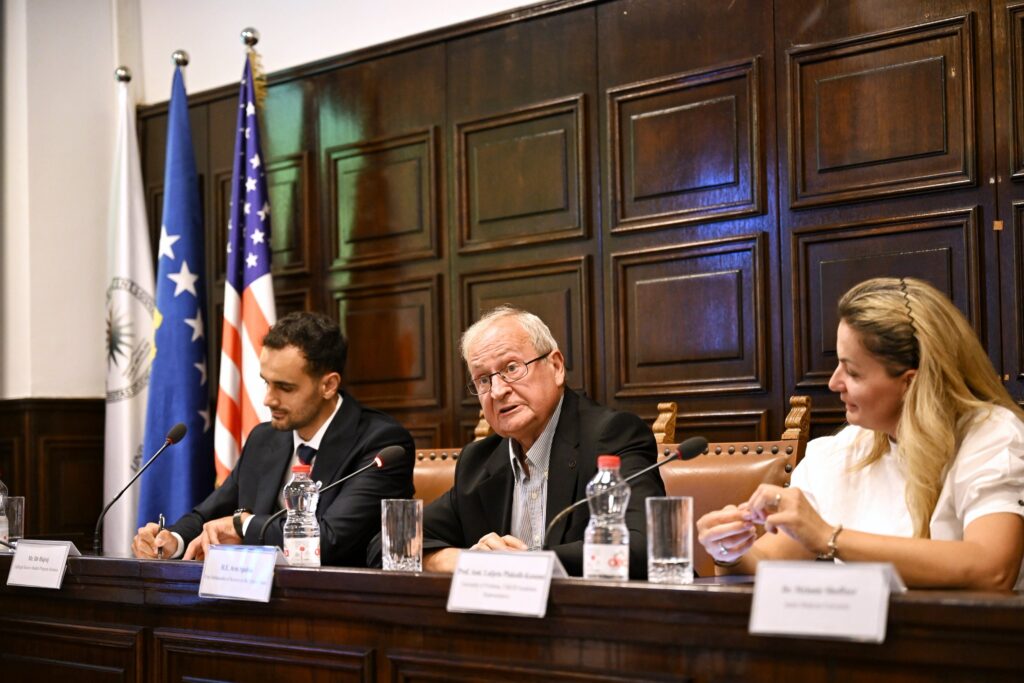
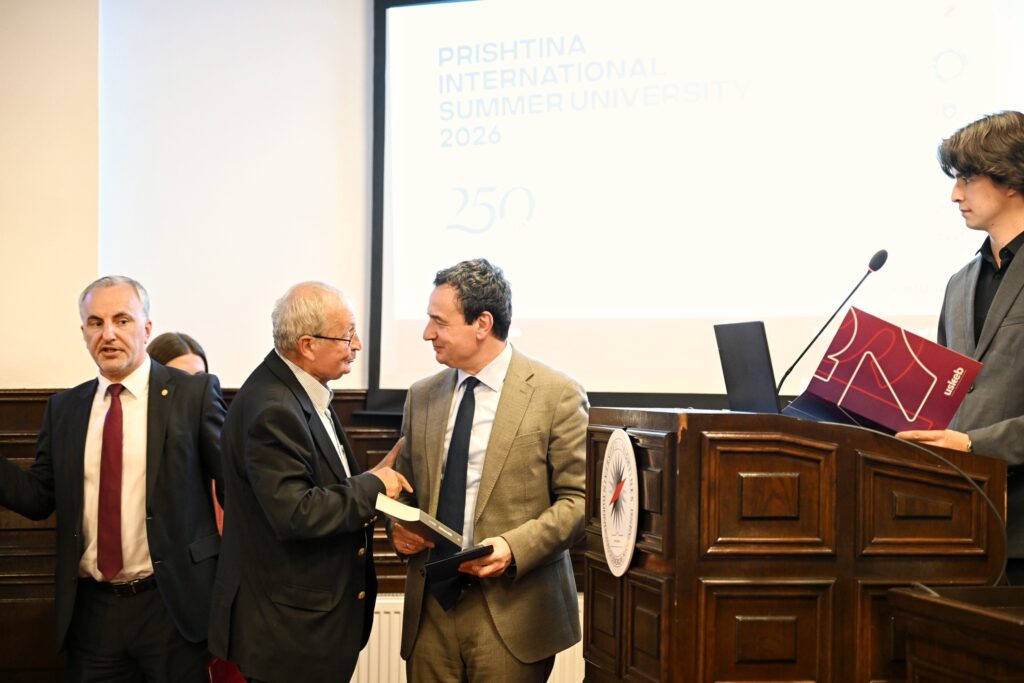
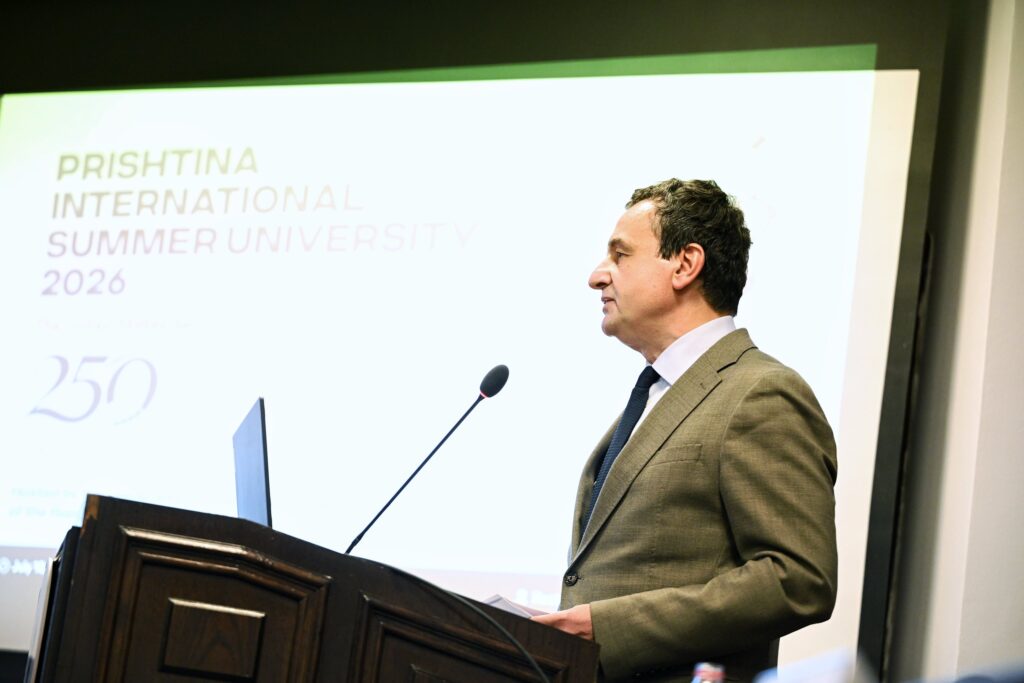
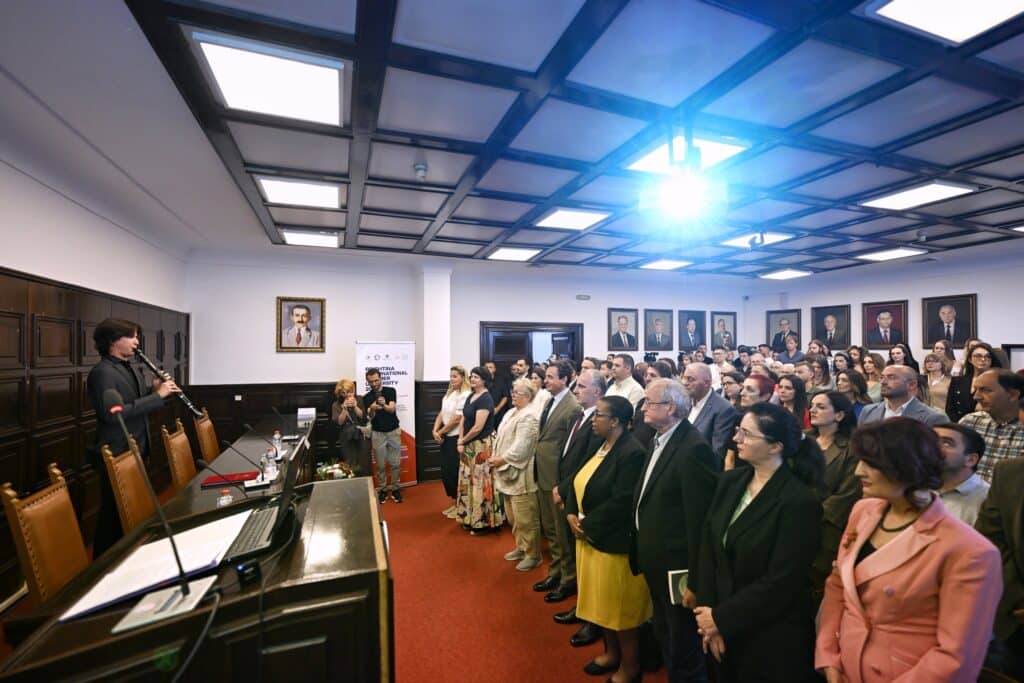
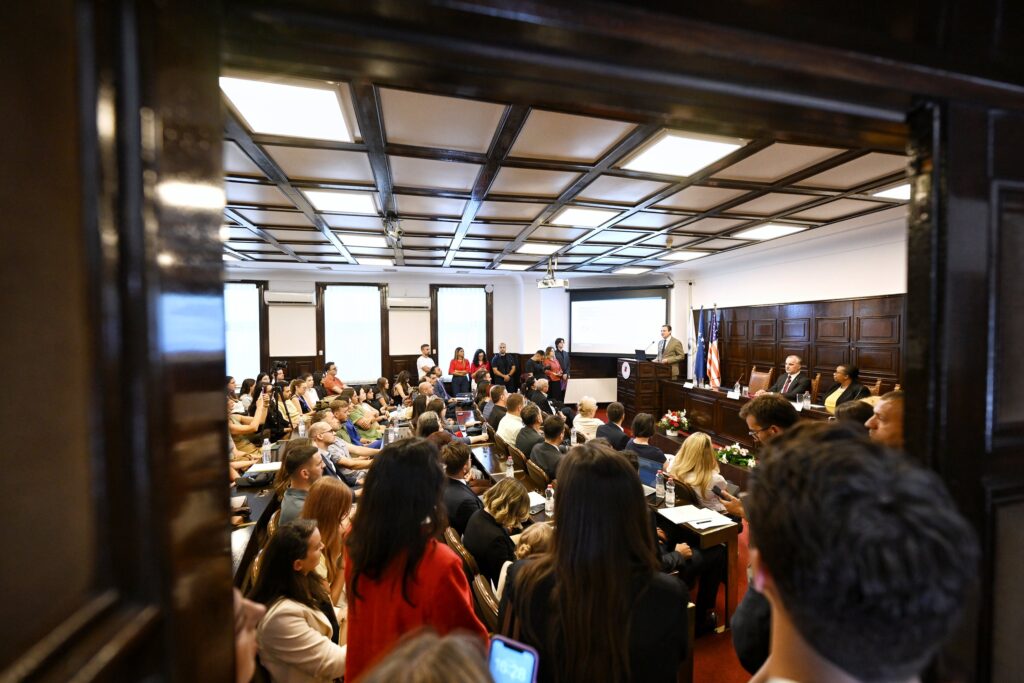
The Acting Prime Minister of the Republic of Kosovo, Albin Kurti, delivered the opening lecture of the discussion entitled “The United States Semi quincentennial: 250 Years as a Beacon of Democracy for the World”, held as part of the programme of the Prishtina International Summer University, which is co-organized by the Government of the Republic of Kosovo.
Full Speech by Acting Prime Minister Kurti:
Dear Rector of the University of Prishtina, Professor Arben Hajrullahu, and Vice Rectors,
Dear Deputy Chief of Mission of the Embassy of the United States in Kosova, Ms. Wylita Bell,
Dear President of the Kosova Academy of Arts and Sciences, Professor Justina Shiroka-Pula,
Dear Mr. Avni Spahiu, former and first ambassador of the Republic of Kosova to the United States
Dear colleagues from the Government and the Parliament,
Representatives of the American Council and the U.S. Kosova Educational Exchange Board,
Distinguished faculty and students of the University of Prishtina and the Prishtina International Summer University,
Ladies and gentlemen,
It gives me great pleasure to speak at the opening of this unique event, which the Government of the Republic of Kosova is co-organizing in honor of the 250th anniversary of American independence, along with the University of Prishtina and the U.S. Kosova Educational Exchange Board. I want especially to thank Rector Hajrullahu for hosting us today. And I extend a warm welcome to the participants of the Prishtina International Summer University, some of whom have travelled from around the world to be here, including 32 students and 7 professors from the United States.
At least since Alexis de Tocqueville’s study of democracy in America, a serious discussion of the democratic ideal cannot be held without discussing its fate in the American context. The fate of this ideal in the modern era plays itself out most dramatically in the history of the United States. As is well known, the American Founding Fathers were not much fond of the word ‘democracy’, they preferred the word republic, republicanism, etc. The reason being that democracy for them signified one particular type, namely the ancient Athenian style of democracy, which they found to be inadequate under modern conditions. Nonetheless, how to hold onto the best features of ancient Athenian democracy under modern conditions was a key question in the minds of the American founding fathers as they were wrestling with the political form that the newly independent United States would take. As we know, Madison’s vision of a “compound republic” largely prevailed; of course, not without the contribution of others, and most importantly, not without a lot of debate and contestation during and following the Constitutional Convention in Philadelphia. The debate between Federalists and Anti-Federalists is its own distinct chapter in the history of modern democratic theory, holding important lessons to this day for all those interested in the fate of the democratic ideal in modern times.
For me as a social-democrat, however, the chapter of US history and American political thought that has always held the most interest is the so-called Progressive Era (1890s-1920s), when the precious American experiment in self-government had to face the rise of the great limited liability corporation, L.L.C., and alongside that, the ever-widening gap between the super-rich and the rest. Can the democratic ideal survive such tendencies? In my modest view, one of the most significant American thinkers to wrestle with the democratic problems of this era is John Dewey, who by many commentators is called the American left Hegelian – a designation I happen to agree with. Dewey recognized that the fate of the democratic ideal under conditions of unfettered capitalism is under serious threat and that serious efforts have to be made to stop its erosion. As he puts it in his essay “The Need for a New Party”, from 1931: “As long as politics is the shadow cast on society by big business, the attenuation of the shadow will not change the substance. The only remedy is new political action based on social interests and realities.”. How to prevent politics from becoming the shadow cast on society by big business, is exactly the problem that continues to preoccupy us social-democrats to this day, and no one has formulated it more aptly than Dewey.
But besides formulating the problem, Dewey also gave us a sense of where the solution should be sought. He thought this was supposed to be some form of social democracy, which he described as follows:
“A social democracy signifies, most obviously, a state of social life where there is a wide and varied distribution of opportunities; where there is social mobility or scope for change of position and station; where there is free circulation of experiences and ideas, making for a wide recognition of common interests and purposes, and where utility of social and political organization to its members is so obvious as to enlist their warm and constant support in its behalf. Without ease in change, society gets stratified into classes, and these classes prevent anything like fair and even distribution of opportunity for all . . . The importance of such qualities is the reason why we venture to call a social democracy a moral democracy”, John Dewey, “The Need for Industrial Education in an Industrial Democracy.
It is only proper that such a libertarian, that is to say, anti-authoritarian vision of social democracy was articulated by none other than an American left Hegelian. Dewey gives the left Hegelian tradition precisely what it was missing in its European variety, namely the libertarian and democratic interpretation of the socialist ideal.
Dewey’s social-democratic thought has been an inspiration to me, both when I was a grassroots activist in opposition and now as Prime Minister of Kosova and leader of the ruling party. As we confront the rise of powerful, big businesses here in our country, I believe Dewey’s warning about the danger of politics becoming the shadow cast by big business remains as relevant as ever.
Much more known than Dewey’s significance to me as a Kosovar Albanian activist and politician is, of course, the American contribution to the building of our state and the strengthening of our democracy. From the help of American legal experts during the drafting of our Constitution, through the American expertise and financial help toward the strengthening of our policy-making and policy-implementing capacities, and to the critical American contribution toward helping us maintain a vibrant civil society, today’s Kosova owes much to our American friends. Even though as a percentage of the US federal budget, such foreign aid may indeed seem rather miniscule, to our democracy it has made all the difference that matters.
Besides these tangible contributions to Kosova’s progress, another thing I greatly admire about the United States is its ongoing commitment to vigorous democratic discourse. The critical spirit that animated the great debates at America’s founding continues to this day. This commitment is reflected in both U.S. government institutions and the public at large, and it rightly serves as a model for other countries.
It is perhaps no surprise that the world’s first mass democracy has given rise to what is often called “the world’s greatest deliberative body”. I am referring here to the U.S. Senate, which has produced such illustrious figures as Daniel Webster, Henry Clay, and Edward Kennedy, and Robert Dole, the namesake of the Dole Institute and a tireless advocate for Kosova’s people throughout the ‘90s of past century.
But I want to suggest that the U.S. Supreme Court may be just as important as the Senate, as a model of democratic deliberation. This may seem like a surprising claim, to some of you at least. Supreme Court justices are not democratically elected, and the Court is known mainly for its rulings, rather than for the deliberative process that precedes them. But, as Supreme Court Justice Ketanji Brown Jackson has observed, “Judges are the only branch of government who are required to write our opinions, to explain our decisions.”. This is precisely what led the 20th century American political philosopher, John Rawls, to say that the Supreme Court should serve as an “exemplar of public reason.” Exemplar of public reason, so even here you can notice the Kantian flavor of John Rawls.
Indeed, the American commitment to vigorous debate is on full display in Supreme Court opinions. Even when the Court issues a final decision, dissenting justices do not hesitate to say exactly why they think that decision is wrong. This open but reasoned disagreement then serves as a model for democratic discourse. In this way, a Supreme Court decision often marks the starting point for public debate of important constitutional questions, rather than the endpoint.
There is no conflict between this dedication to open criticism and an equally strong commitment to the rule of law. Abraham Lincoln demonstrated this best in his response to the Supreme Court’s decision in Dred Scott v. Sanford, which infamously excluded Black Americans from U.S. citizenship. Lincoln harshly criticized the decision, and he openly expressed his hope that the Court would change its mind in the future. But he also accepted that, at least for the individual case at hand, the Court’s decision was binding.
As Prime Minister, I have tried to emulate this balanced attitude toward judicial decisions. Courts are of course authoritative in the cases they decide. But I have not hesitated to say when I think they have decided wrongly. And I, too, hope that in the future, they will overturn some of their decisions. But in order to reach that point, open public criticism is essential. Without such criticism, courts would never have the occasion to correct their mistakes — to evolve and to grow in their constitutional jurisprudence.
Beyond questions of constitutional law, this attitude of evolution and growth is evident in the great social movements of the United States in the past 250 years. From Frederick Douglass and Susan B. Anthony in the 19th century, to Martin Luther King, Jr. and Dolores Huerta in the 20th, American democracy has shown itself to be a powerful engine of human progress.
In 1787, eleven years after the Declaration of Independence, the U.S. Constitution began with the immortal words, “We the people of the United States, in order to form a more perfect union.”. It is interesting that the concept of “perfection” has two distinct, though related meanings. It can refer to a state of being: that is, the state of being without flaws. Prefect, perfect being. Or it can refer to a process: that is, the process of perfecting oneself or something else. No society can attain perfection in the first sense; but it can be a model of perfection in the second sense. It is this sense in which the United States has served, and continues to serve as a beacon of democracy, as an inspiration and a guiding light for Kosova and the world. It is a country that is constantly reflecting, growing, and evolving — a nation that will never cease the process of perfecting itself, for all those living today, and for all future generations.
Thank you very much!