Prishtina, 24 April 2026
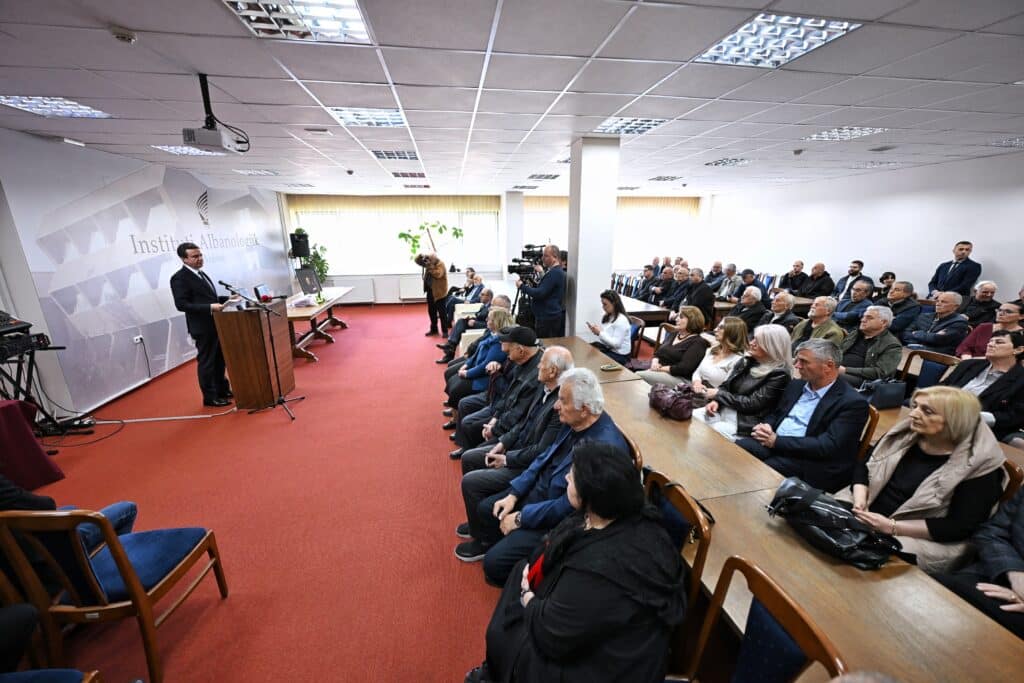
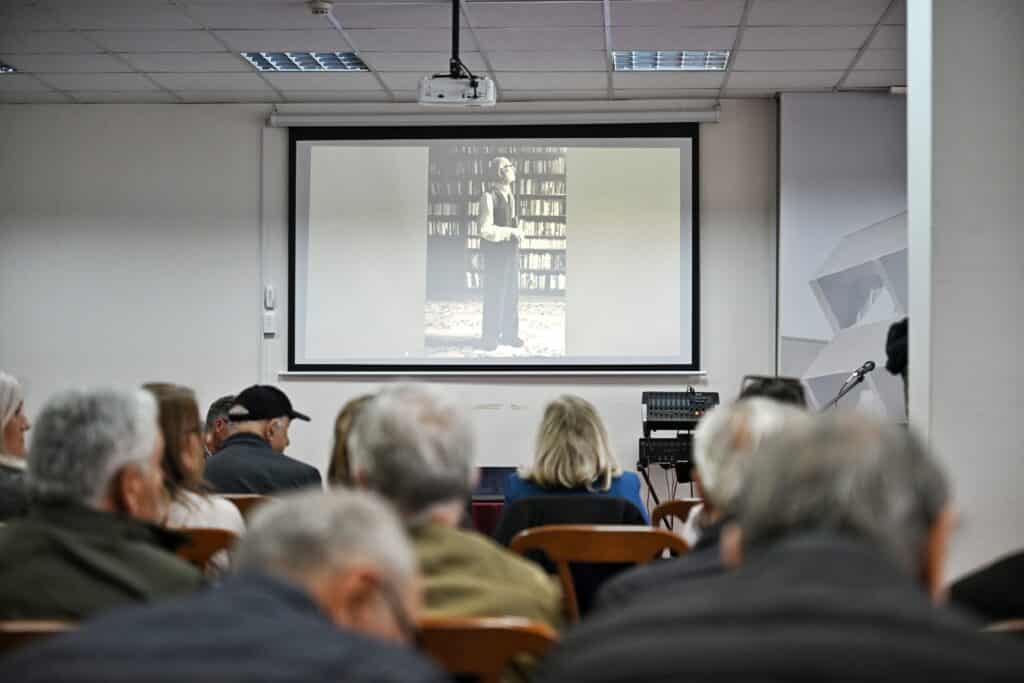
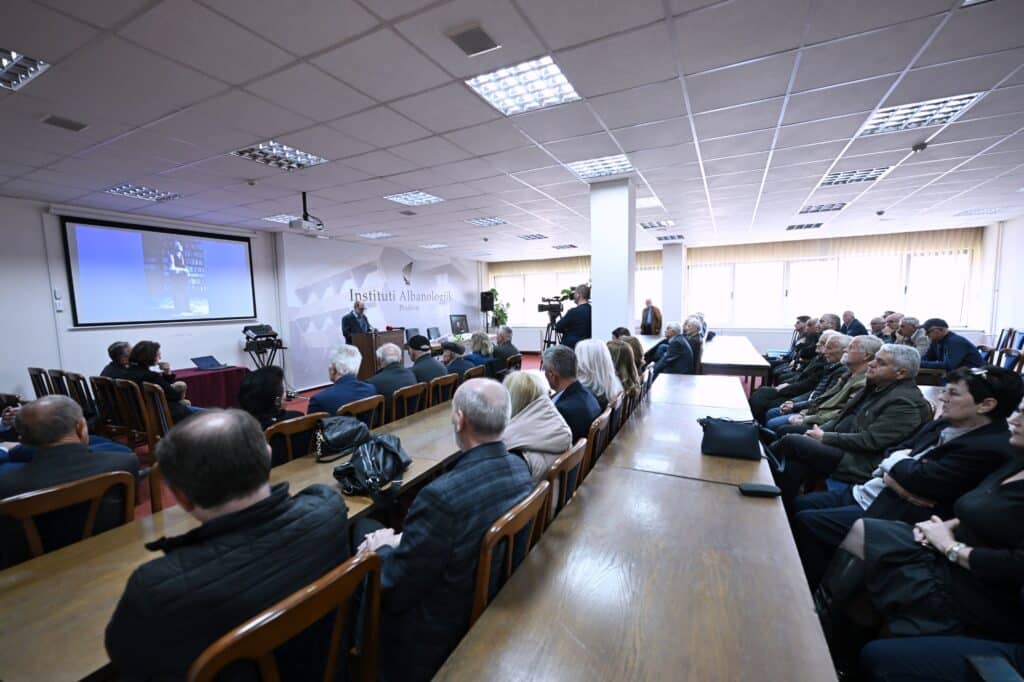
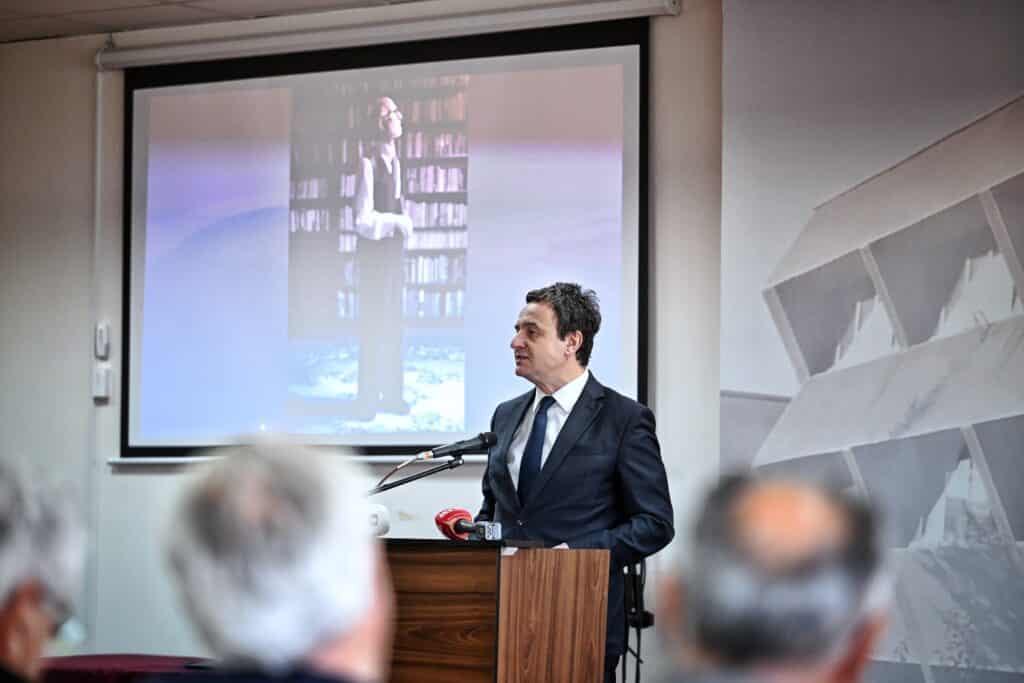
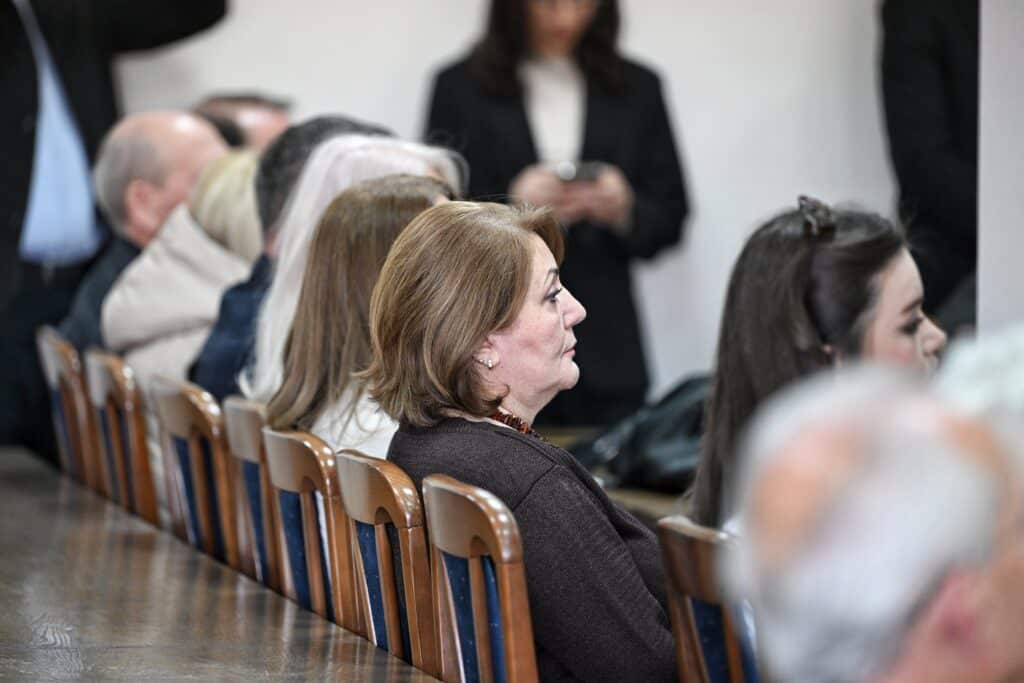
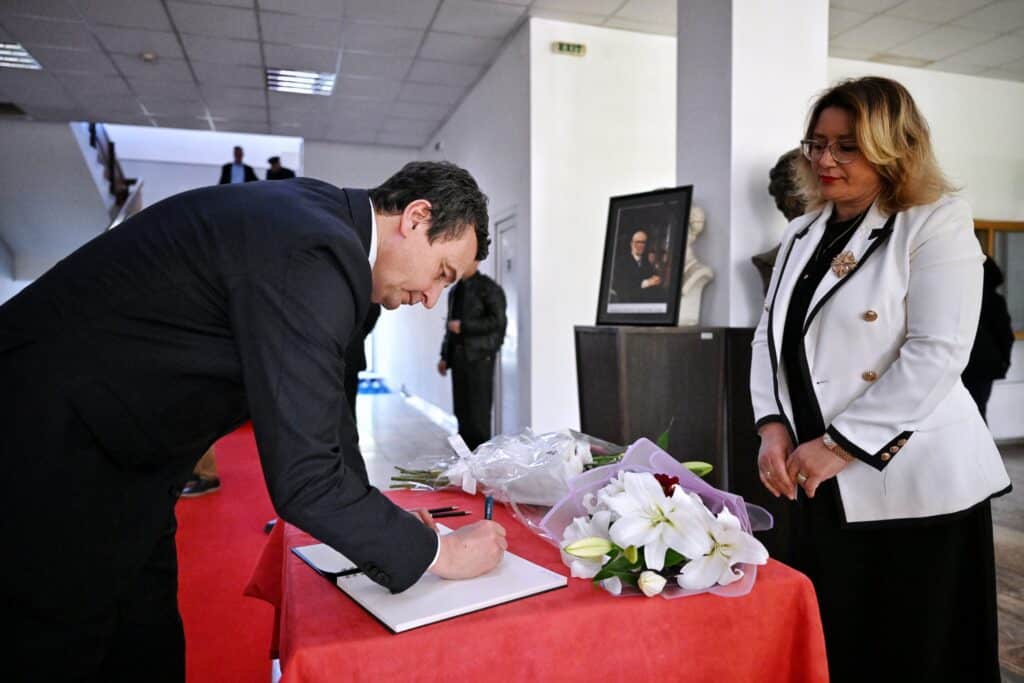
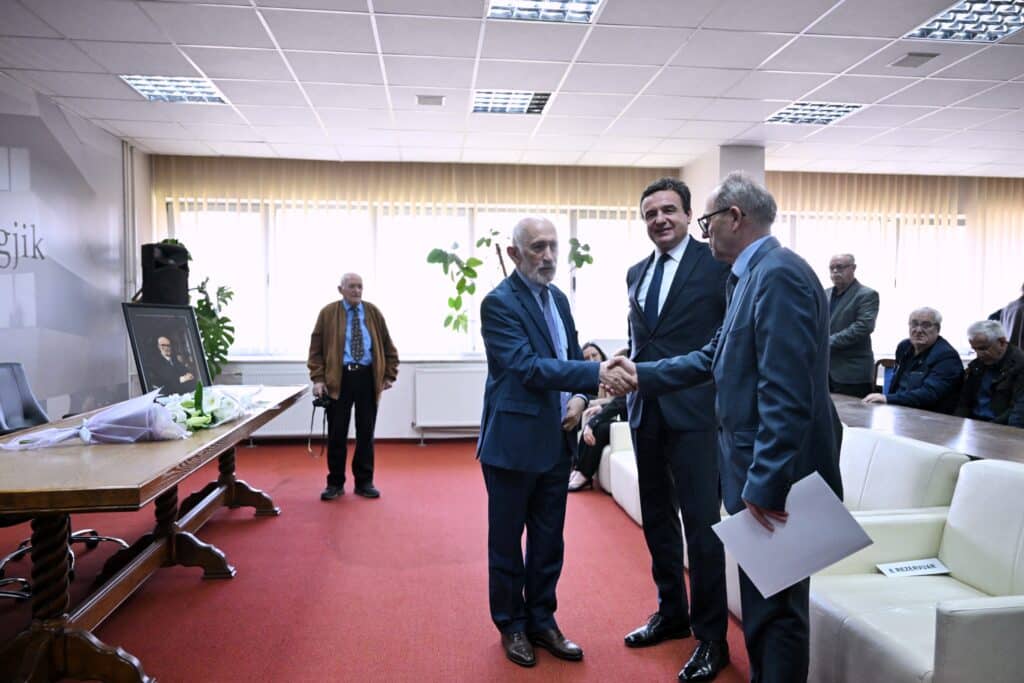
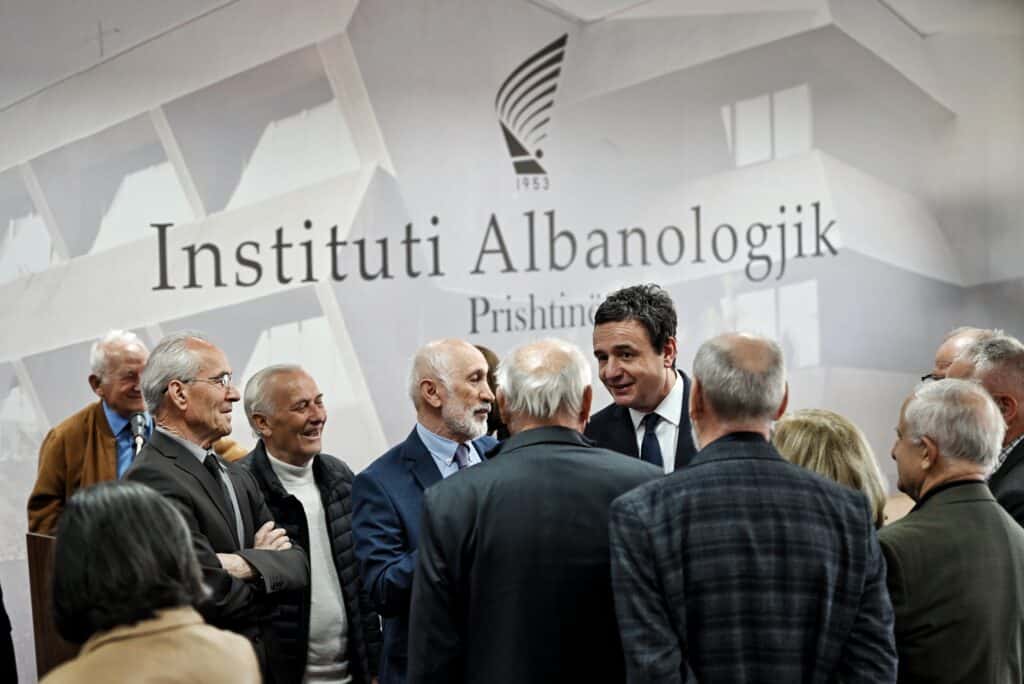
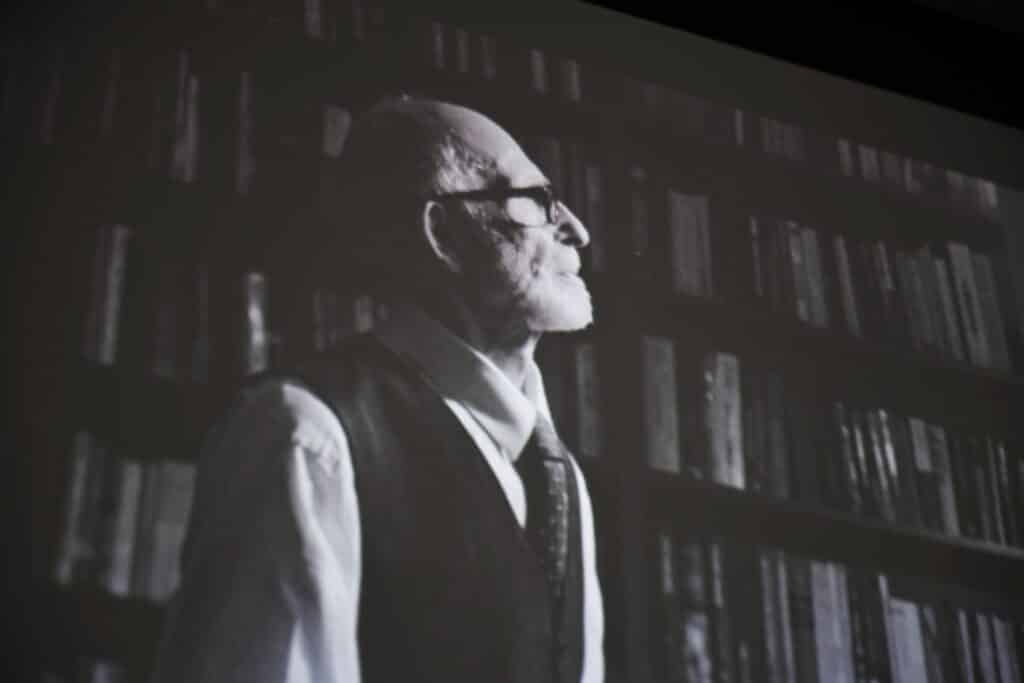
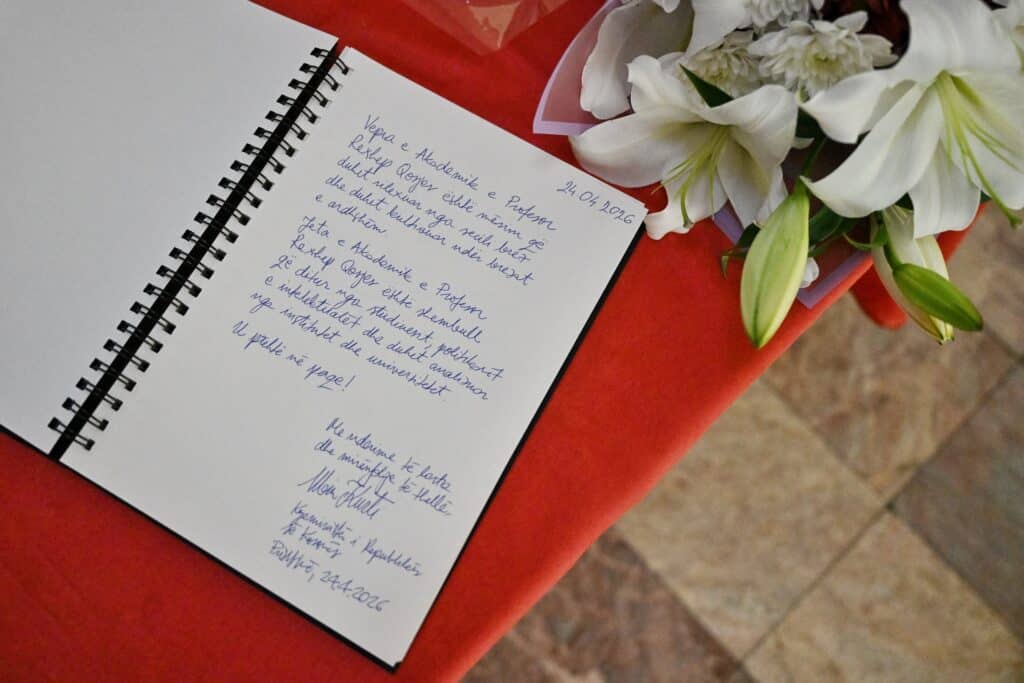
The Prime Minister of the Republic of Kosovo, Albin Kurti, participated in the commemorative meeting held on the occasion of the passing of Academician Rexhep Qosja, organized by the Albanological Institute.
Full speech of Prime Minister Kurti:
Honourable Mr. Fadil Grajçevci, Acting Director of the Albanological Institute,
Honourable Mr. Hysen Matoshi, researcher,
Dear friends and colleagues, professors and students,
Honourable academicians and researchers,
Distinguished participants,
Ladies and gentlemen,
We are gathered here at the Albanological Institute, whose host, in essence, was Professor Rexhep Qosja himself. Rexhep Qosja is our great academic, because his comprehensive mastery of the word—syntax, phraseology, lexicon—articulates as much linguistics as it does intellectualism and politics. Distinguished speakers of language could not fail to find their place in his reflections, whether of the Albanian language or of the world.
All our Renaissance figures and all our classics were drawn by him into a process of reflection, because Albanian belongs to the world and the world belongs to Albanian for the proper names—from Virgil to Balzac, and from Kafka to Eco—fell upon him with the resonance of thought and the gravity of their names. A profound sense of literature in the very corner of the Albanian language.
Because the experiences of study inevitably turn into an intelligence of action—even if the creator does not express himself politically, his act creates a new circumstance of meaning, and this is a new condition of politics and of the city.
Because the duality of thought between literature and philosophy could not but become his enduring doubt about the violence of love and the sins or faults of thought, for he did not desire a province but a city—and the city is not the number of inclusion, but the measure of participation.
Because, from an author who listed the criteria for entry into the Pantheon, he became one of the few contained within it; and as a Renaissance figure, he made it impossible to ask whether Naim Frashëri, Jeronim De Rada, Asdreni, or Migjeni could be considered provincial.
Because, ultimately, every Renaissance figure gives the world his birthplace—and vice versa.
Because he did not see the great message for Albanians as anything less than the entirety of centuries of Albanian writing. He could not resist the temptation to connect the prose and poetry of the Renaissance writers directly with the works of past centuries and distant lands.
Because he did not see death as anything less than the aim of a senseless sense over a mind that loses its sense—and like every great writer, he engaged, due to the urgencies of his time, with all ideological and traditional constraints.
Because he spoke of the gaze of the “great other” who is not a brother, within an invented federation under which an entire people and culture were being consumed, but also of the hypocritical, snobbish, and demagogic gaze from within the province. He invited the reader to be sincere with oneself, knowledgeable about oneself, kind to others, and useful to others.
Because fluctuations and doubts became the constant impetus of a profound mind with broad knowledge in a world of shallow and cynical violence. Therefore, he needed great debates with the giants of his time to establish the planes of consciousness and imagination of the future society—hence, his debate with Kadare.
Because he did not express loyalties through divisions of history, but through its unifications, understanding—like Ukshin Hoti—that history should not be divided, while politics must be.
Because if history seeks the truth, politics confronts it.
Hence, his conflict with all establishments of the times in Kosovo.
Because he spoke of silence and the cry: the silence of the creative intellectual and the cry of a silenced people.
Academician and Renaissance figure—a formula we still need, always and forever, in our moral and political directive.
Finally, and by way of curiosity, our academic often recalled a situation from Chekhov, in a simple story titled “Pilivricka.” There, I quote: “It is said that a scholarly doctor is not respected by those around him because they see him every day, but they understand his importance only after he dies suddenly—indeed, after they have poisoned his life with their arrogance and immorality.”
May Professor Rexhep Qosja rest in peace, and fortunate are we who had him.
Thank you!